
Amazon DSP Private Marketplace: What 2026 Benchmarks Reveal About Premium Inventory
Descriptions
The Amazon DSP Private Marketplace is the part of the platform built for advertisers who care about where their ads run, not only how many people see them.
Open a typical Amazon DSP account, and most of your spend flows straight into the open exchange, where advertisers compete for the same pool of available impressions. But as Amazon advertising gets more expensive, buying more impressions is no longer enough. SellerApp’s State of Amazon Advertising 2026 found that platform CPMs rose 47% in 2025 to $7.82, making the quality of every impression increasingly important.
This guide breaks down what a private marketplace is inside Amazon’s demand-side platform, how premium inventory changes campaign outcomes, and when Amazon DSP private deals are worth a higher CPM.
Quick Gudie :
- What Is an Amazon DSP Private Marketplace (PMP)?
- Open Exchange vs Private Marketplace vs Programmatic Guaranteed
- Why Premium Inventory Performs Better Than Standard Inventory
- When Should You Use Amazon DSP Private Marketplace Deals?
- How Amazon DSP Private Marketplace Deals Actually Work
- Understanding Amazon DSP PMP Pricing
- How to Measure Amazon DSP Private Marketplace Performance
- Common Amazon DSP PMP Mistakes That Waste Budget
- How SellerApp Helps Brands Maximize Amazon DSP Private Marketplace Performance
- Final Takeaway: Choosing the Right Inventory Strategy for Long-Term Growth
- FAQ
What Is an Amazon DSP Private Marketplace (PMP)?
An Amazon DSP Private Marketplace is an invite-only buying environment where selected advertisers get access to curated, high-quality publisher inventory through pre-negotiated deals, rather than competing for whatever impressions are available in the open auction.
In practice, that could mean a beauty brand securing premium video inventory around high-engagement entertainment content, a consumer electronics brand getting priority access to Connected TV placements during a product launch, or a seasonal advertiser locking in premium publisher inventory before competition spikes around Prime Day.
Access is controlled by a Deal ID, a unique code that ties your Amazon DSP account to a specific inventory package and its agreed terms. Depending on the deal, those terms could include a fixed CPM, a minimum auction price, priority access to impressions, or guaranteed delivery volume.
The benefit is not simply access to more inventory. It is greater control over where your ads appear, who sees them, and how reliably they are delivered. A premium placement may cost more per thousand impressions, but the higher CPM can pay off when more of those impressions are actually viewable, completed, served in brand-safe environments, and exposed to audiences that are more likely to become new customers.
That is why ROI should not be judged on CPM alone. For example, SellerApp’s 2026 benchmarks show that 36.5% of DSP-attributed purchases come from new-to-brand customers.
For an advertiser using premium inventory for prospecting or awareness, the return may show up through stronger new-customer acquisition and incremental sales, not just immediate clicks.
In plain language, the open exchange is a public marketplace where anyone can bid. A PMP is closer to getting priority access to a curated set of placements. You may pay more to enter, but you gain more control over the quality and context of the impressions you are buying.
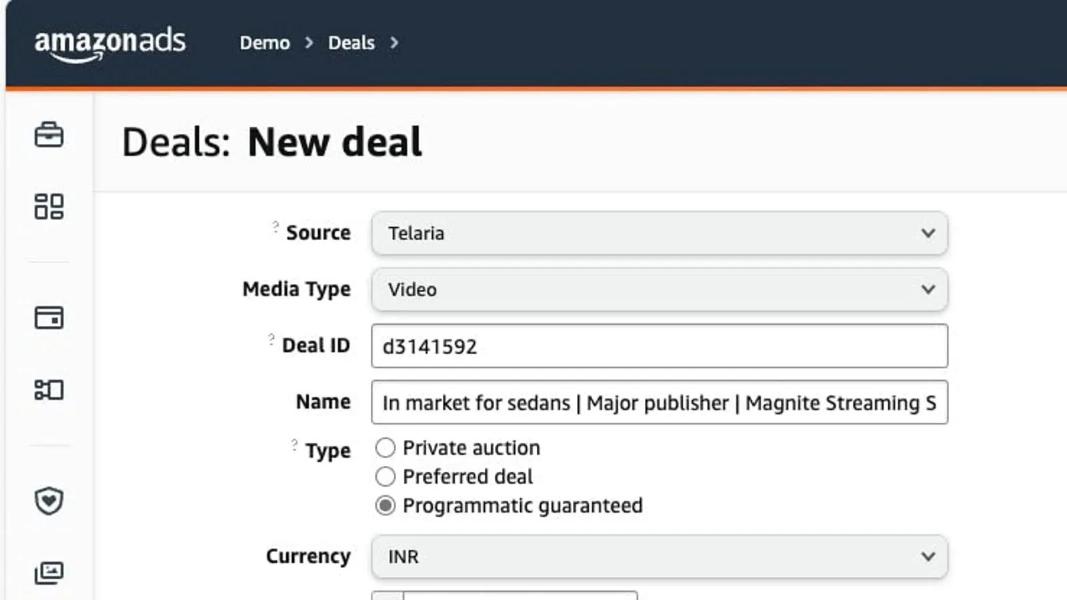
Amazon DSP PMP and Amazon DSP private deals are used interchangeably, which is fine day-to-day. Under the hood, the Amazon DSP Private Marketplace covers a set of Amazon DSP deal types that behave differently on price, guarantees, and competition, from Amazon DSP preferred deals to Amazon DSP programmatic guaranteed agreements.
Open Exchange vs Private Marketplace vs Programmatic Guaranteed
Amazon DSP does not use a single method to buy ad inventory. Advertisers can access inventory through three main buying paths: the open exchange, private marketplace deals, and programmatic guaranteed agreements. Each offers a different balance of scale, inventory quality, pricing control, and delivery certainty.
Before choosing how to buy, it helps to see how those three paths compare. The open exchange prioritizes scale and flexibility. The Amazon DSP Private Marketplace gives advertisers access to curated inventory through negotiated deals, while programmatic guaranteed is built for campaigns that need a fixed volume of impressions delivered at agreed terms.
| Feature | Open Exchange | Private Marketplace (PMP) | Programmatic Guaranteed |
| Access | Open to all bidders | Invite-only via Deal ID | One-to-one publisher agreement |
| Inventory quality | Mixed, variable | Curated, premium | Curated, premium |
| Pricing | Auction-driven, lowest cost | Floor price or fixed CPM | Fixed, negotiated CPM |
| Delivery | No guarantee | No volume guarantee | Guaranteed impressions |
| Competition | High | Limited, vetted buyers | None |
| Best for | Broad reach, testing, efficiency | Quality, brand safety, control | Tentpole moments, certainty |
| Transparency | Low | High | High |
The takeaway is not that one method wins every time. Mature programs run all three: the open exchange for cheap scale, private deals when placement quality matters, and guaranteed buys for moments they cannot miss.
Why Premium Inventory Performs Better Than Standard Inventory
Advertisers do not pay more for private deals out of habit. They pay because the real risk is not a higher CPM. It is putting a seven-figure media budget into impressions that are cheap to buy but easy to ignore.
Consider a brand investing $1 million in Amazon DSP. Put the entire budget into standard inventory, and the brand may maximize impression volume. But if more of those impressions appear in lower-value environments, go unseen, or repeatedly reach audiences that already know the brand, the cheaper CPM can become expensive waste.
Shift part of that same budget into premium inventory, and the equation changes. You may buy fewer impressions, but you gain greater control over where they appear, stronger viewability, premium video and CTV environments, and better opportunities to reach new customers.
SellerApp’s State of Amazon Advertising 2026 found that 36.5% of DSP-attributed purchases came from new-to-brand customers. For a brand spending $1 million, missing that acquisition opportunity because the media plan was optimized only for cheap reach is the bigger cost.
Platform CPMs rose 47% in 2025 to $7.82, with Pets reaching $11.66 and Health $11.13. The lesson is not that expensive inventory automatically performs better. It is that advertisers are already paying more for access to competitive audiences. The question is whether that spend is buying maximum volume or impressions with the quality, context, and attention to influence an outcome.
Higher-quality publisher inventory
In the open exchange, advertisers bid across a broad pool of available inventory. That pool can include high-quality publisher placements, but the level of control and transparency varies.
An ad might appear on a highly engaged content page, while another impression may be served in a placement with low visibility or limited user attention.
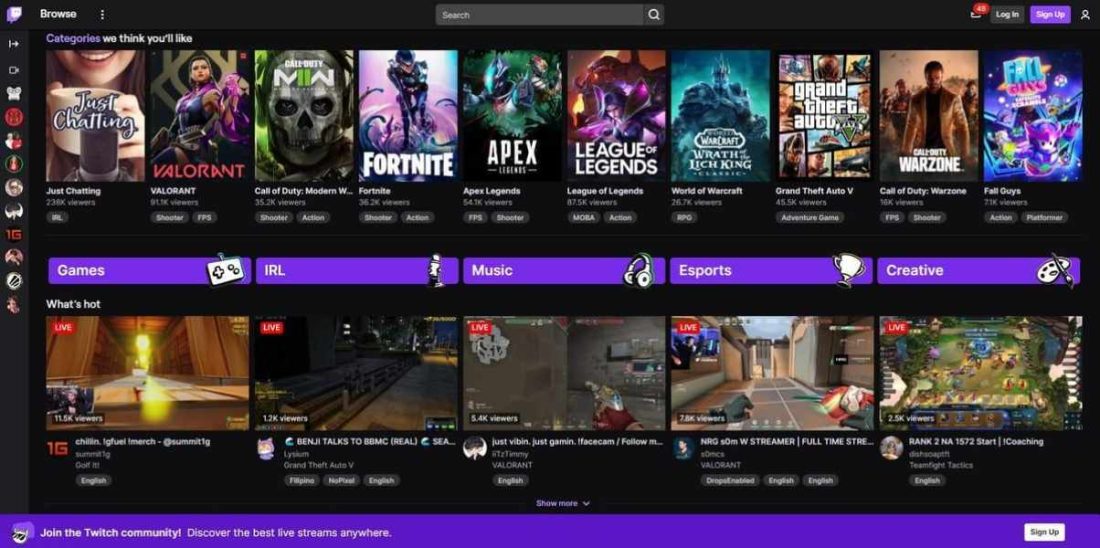
Amazon DSP premium publishers are vetted, brand-name properties, including Amazon-owned surfaces like Amazon Prime Video, Twitch, Fire TV, and IMDb, plus direct-integrated third-party sites.
When you buy through the Amazon DSP Private Marketplace, you are choosing the environment, not accepting whatever the auction hands you.
Better audience quality
Audience targeting determines who sees the ad. Inventory determines the environment in which they see it. Both influence the outcome.
For example, a shopper researching a new television may fall into the right Amazon audience segment. But reaching that shopper through a low-attention display placement is very different from reaching them through premium video or Connected TV content they are actively watching.
Amazon DSP private deals let advertisers combine Amazon’s first-party shopping and streaming signals with more controlled publisher environments. The advertiser is not only reaching a relevant audience based on browsing, purchase, or viewing behavior, but reaching that audience in a context where the ad has a better chance of being noticed.
That is the advantage of premium inventory: targeting helps you find the right person, while the placement determines the quality of the opportunity to influence them.
Higher viewability and engagement
Curated inventory tends to place ads where people can see them, above the fold, in-stream, or in full-screen streaming environments. Viewability is one of the clearest advantages of Amazon DSP premium ad inventory.
Video and Connected TV placements bought through private deals also carry higher completion rates than most open-web video. Across the platform, short-form video completion runs roughly 65 to 75%, and video campaigns average a 2.4x return on ad spend against brand objectives, which is a large part of why premium video supply earns its cost.
Stronger brand safety
When you buy in the open auction, you inherit some risk of showing up next to content you would never choose. Amazon DSP private deals remove most of that exposure because you know exactly which publishers you are running with. For premium and regulated brands, that control is the whole reason to run in the Amazon DSP Private Marketplace.
Better campaign consistency
A campaign can have the right audience and creative and still struggle if the inventory available to it changes from day to day. In the open auction, shifts in advertiser demand, bid competition, and available supply can affect where ads run, how much impressions cost, and how evenly the budget is spent.
Amazon DSP Private Marketplace deals reduce some of that variability by giving advertisers access to a defined pool of inventory under pre-negotiated terms. This can lead to steadier pacing, more predictable costs, and a more consistent quality of placement across the campaign.
When Should You Use Amazon DSP Private Marketplace Deals?
Amazon DSP Private Marketplace deals are not the right answer for every campaign. For example, a brand testing a new audience with a limited budget may be better off using the open exchange to reach more people and learn which segments respond before paying a premium for specific inventory.
Put that same test budget into a private deal too early, and the consequences can be expensive: the higher CPM may reduce reach, the campaign may not generate enough data to optimize, and the brand could end up paying more without a measurable improvement in outcomes.
The reverse is also true. A premium brand running a major product launch entirely through the open exchange may save on CPM but lose control over placement quality and delivery during the period that matters most.
The question, then, is not whether private inventory is better. It is whether the campaign goal justifies paying for greater control, quality, and certainty. Open auctions still win on raw scale and cost per impression. The question is what the campaign is trying to accomplish.
Private buying is no longer a niche line item either: the demand-side platform’s share of Amazon ad spend rose from 17.7% to 23.4% across 2025, and by Q1 2026 it turned cheaper per click than Sponsored Products for the first time on record. These are the scenarios where the private marketplace consistently earns its premium.
Product launches
A launch is a moment you cannot repeat. Reserving Amazon DSP premium inventory in advance protects your share of voice during the window that matters most, so you are not outbid on day one of a launch you have built toward for months.
Premium brands
If your product lives on positioning and perception, context is part of the message. A luxury, beauty, or high-consideration brand needs to appear beside content that reinforces its value. Amazon DSP premium publishers give you that adjacency in a way the open exchange cannot promise.
Connected TV campaigns
CTV is where private deals shine. Premium streaming inventory is limited, competitive, and best bought with certainty. Running CTV through the private marketplace secures non-skippable, full-screen placements on Amazon DSP premium publishers, which is exactly what upper-funnel video is meant to deliver.
Seasonal campaigns
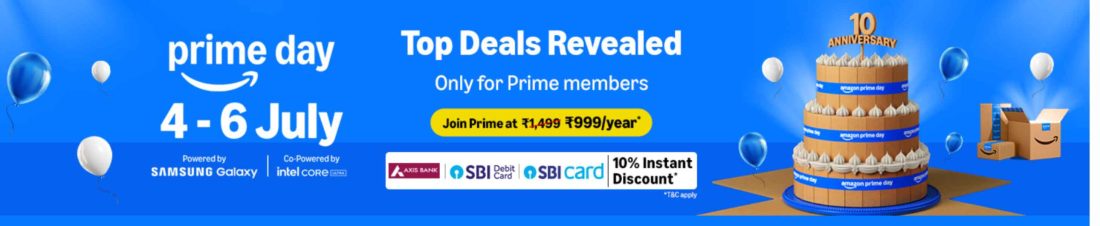
Peak windows like Amazon Prime Day, Amazon Black Friday, and Amazon Cyber Monday send open-auction CPMs soaring, and delivery becomes unpredictable. Locking in Amazon DSP Private Marketplace deals ahead of the rush protects both your pricing and your placement when everyone else is fighting for the same impressions.
Enterprise awareness campaigns
Large-scale branding has to hit reach and quality without giving up control. Enterprise advertisers use Amazon DSP inventory buying through private deals to hit big audiences on premium supply without sacrificing brand safety or viewability across a long flight. At the highest spend tiers, managed buying, streaming TV, and Prime Video upfronts become standard, which is exactly where private access to premium video pays off most.
This is where a managed Amazon DSP partner usually takes over, since running upfronts and private deals at that scale is a full-time job.
| Business Goal | Recommended Buying Method | Why |
| Maximum reach at lowest cost | Open exchange | Scale and efficiency beat curation |
| Guaranteed delivery for a launch | Amazon DSP programmatic guaranteed | Locked volume and price, no auction risk |
| Premium context for a high-value brand | Amazon DSP Private Marketplace | Curated, brand-safe, premium supply |
| First-look access without volume lock-in | Amazon DSP preferred deals | Priority access at a fixed CPM |
| Competitive access to premium video | Private auction (PMP) | Vetted competition on premium inventory |
How Amazon DSP Private Marketplace Deals Actually Work
The mechanics are simpler than the terminology suggests. Every private deal runs on a Deal ID, a string of roughly 19 characters that a publisher or its SSP generates and shares with you. You add that ID to your line item, and it travels with each bid request so the system applies the negotiated placements, price, and terms instead of treating the impression as open inventory.
Think of it as a key cut for one lock. Within the Amazon DSP Private Marketplace, you will run one of a few structures, and the Amazon DSP deal types differ in ways that matter for how you plan a campaign.
Amazon DSP preferred deals are one-to-one agreements that give you first-look access to a publisher’s inventory at a fixed CPM, before that inventory reaches the open auction. You are not committed to a volume. You pay only when an impression meets your targeting, which makes Amazon DSP preferred deals the flexible option here.
A private auction is invite-only but still an auction. A selected group competes for curated premium supply above a negotiated floor price, so the CPM is variable rather than fixed. That flexibility is why performance-focused buyers often favor private auctions on premium video, where fixed-CPM preferred deals can price them out.
Amazon DSP programmatic guaranteed sits at the most locked-down end. The publisher guarantees a set volume of impressions at a fixed price, with no auction or competition. When delivery certainty is non-negotiable, this is the structure you reach for, even though strictly it is a guaranteed deal rather than a classic PMP.
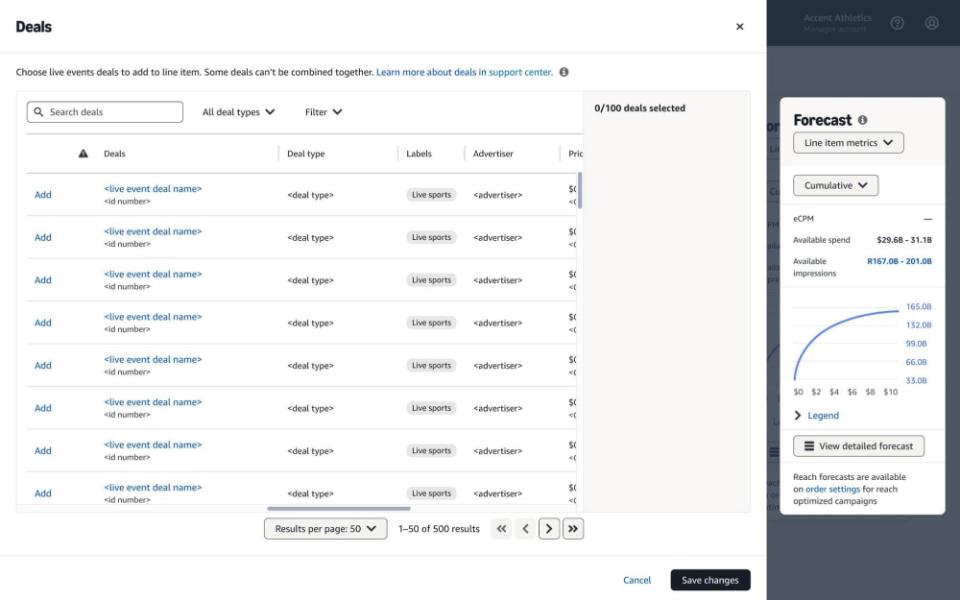
On the supply side, Amazon DSP inventory buying happens through Amazon Publisher Direct packages that Amazon assembles and manages, through third-party exchange deals you coordinate with an outside publisher or SSP, and through prebuilt Amazon-created packages you can activate directly.
Amazon now surfaces all of this in a single Deals view, so discovering and activating Amazon DSP inventory buying options happens in one place rather than across scattered menus.
Understanding Amazon DSP PMP Pricing
Amazon DSP private deals almost always carry a higher CPM than open-exchange impressions, and that premium is the point. You are paying for better supply and control over where you land. What drives the actual number varies from deal to deal, and understanding the levers helps you negotiate rather than simply accept a rate card.
| Factor | Impact on CPM |
| Publisher premium | Top-tier, brand-name supply commands higher CPMs |
| Format | Video and Connected TV price well above standard display |
| Audience specificity | Narrow, high-value audiences raise the floor |
| Deal type | Guaranteed volume costs more than non-guaranteed access |
| Competition | Private auctions clear higher when demand is strong |
| Seasonality | Peak windows push premium CPMs up sharply |
| Floor price | The publisher’s negotiated minimum sets the baseline |
The mistake here is judging an Amazon DSP PMP deal on CPM alone. A higher CPM on inventory that gets seen, in a safe environment, in front of a qualified audience, beats a cheap impression that loads below the fold and never converts. Effective cost per outcome, not raw CPM, should drive the decision.
How to Measure Amazon DSP Private Marketplace Performance
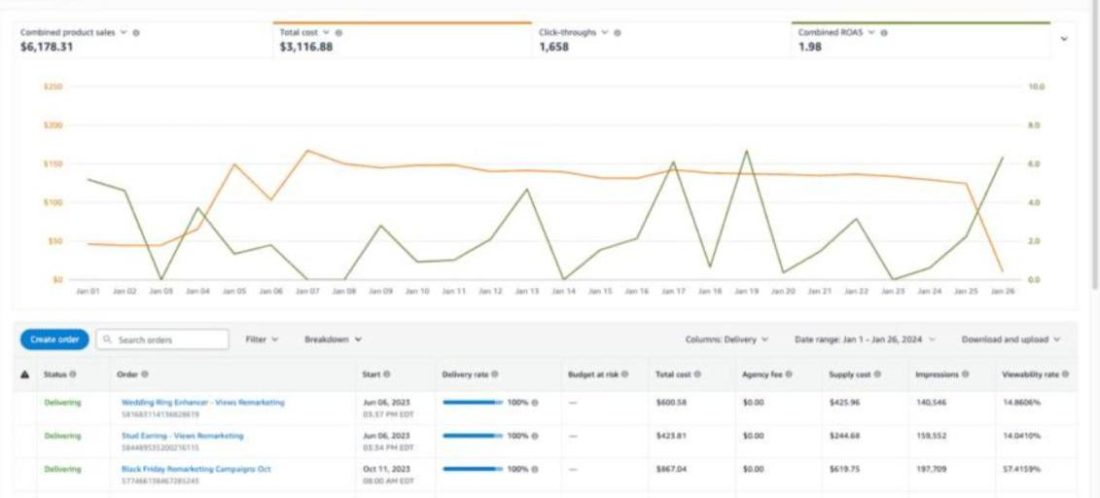
Premium inventory often works across the mid and upper funnel, so judging it only by the final click can make an effective deal look unprofitable. Instead, evaluate performance in four stages.
Step 1: Check whether the deal is delivering
Before looking at ROAS or conversions, confirm that the deal is actually serving impressions as expected. Preferred deals and private auctions do not guarantee volume, so monitor pacing during the first few days.
If a deal is active but spending slowly, check whether it is receiving bid requests and whether the targeting, bid, or supply-side setup is limiting delivery. Amazon’s deal health indicators can help identify issues before several days of the campaign are lost.
Step 2: Check whether the premium inventory is delivering better attention
Once delivery is healthy, measure the quality of the impressions you paid more to access. Track viewability for display inventory and video completion rate for video and CTV placements.
A higher CPM is difficult to justify if the ads are still rarely seen or completed. The first proof of value is therefore not a sale. It is whether the premium placement is creating a better opportunity for the audience to actually notice the ad.
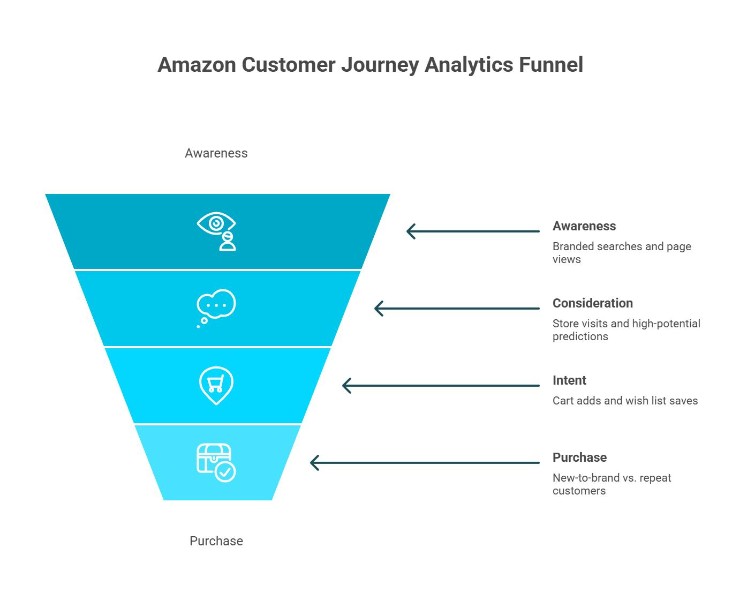
Step 3: Check whether that attention changes customer behavior
Next, look beyond impressions to signals of consideration. Track detail page views, branded search activity, and new-to-brand purchases to understand whether exposed audiences are moving closer to purchase.
Step 4: Connect exposure to incremental business outcomes
Finally, use Amazon Marketing Cloud to examine what happens after exposure. Look at customer journeys across DSP and Sponsored Ads, compare exposed and non-exposed audiences where possible, and measure incremental sales or incremental ROAS rather than giving all the credit to the final click.
The sequence matters: delivery tells you whether the deal is working technically, attention tells you whether the inventory is worth the premium, behavior tells you whether the audience responded, and incrementality tells you whether the investment created business value.
Common Amazon DSP PMP Mistakes That Waste Budget
Activating a deal is easy. Making it perform takes discipline. These are the recurring mistakes that burn premium spend before the campaign has a chance to work.
| Mistake | Business Impact | Better Approach |
| Choosing CPM over quality | Cheap impressions that never convert | Optimize for effective cost per outcome |
| Wrong deal type for the goal | Locked into volume you cannot use, or no delivery certainty | Match the Amazon DSP deal types to the objective first |
| No audience layering | Premium supply, generic targeting, wasted reach | Layer Amazon first-party signals on top of the deal |
| Ignoring frequency caps | Same viewers hit repeatedly, rising annoyance | Cap frequency and exclude converters |
| Mismatched creative | Static display on premium video wastes the placement | Build format-native creative for CTV and video |
| Last-click measurement | Undervalues upper-funnel deals, budget gets cut | Measure incrementality through Amazon Marketing Cloud |
| No delivery monitoring | Under-delivery goes unnoticed for days | Watch pacing and the deal health indicator early |
Most of these come from treating an Amazon DSP PMP deal like an open-auction line item. It is not. Premium inventory rewards planning and punishes autopilot.
How SellerApp Helps Brands Maximize Amazon DSP Private Marketplace Performance
Running private deals well means juggling deal types, pricing, delivery health, audience layers, and measurement all at once, and doing it across every campaign. That is where most teams lose time and margin.
SellerApp manages more than $3 billion in ad spend across 33,000+ brands and publishes the benchmark data behind many of these figures, so the platform is built around exactly this problem. It brings the Amazon DSP Private Marketplace into a single view, so brands and agencies can plan, activate, and optimize Amazon DSP inventory buying without stitching the workflow together by hand.
On the buying side, SellerApp helps you choose the right Amazon DSP deal types for each objective and pair premium supply with the first-party audiences that make it perform.
On the measurement side, it connects deal-level delivery to real outcomes, so you can see whether your Amazon DSP premium ad inventory is driving new-to-brand growth and incremental sales, not just impressions.
For brands scaling Amazon DSP inventory buying across marketplaces, that combination of buying intelligence and outcome-based measurement is what turns private deals from an expensive experiment into a repeatable growth lever.
Final Takeaway: Choosing the Right Inventory Strategy for Long-Term Growth
The choice between open-exchange and private inventory is not either-or. The challenge is knowing which campaigns need scale, which need premium access, and whether the higher cost is actually improving business outcomes. A brand can easily overspend on premium inventory where open-auction reach would have been enough, or prioritize cheaper impressions when placement quality and delivery matter most.
SellerApp helps brands make that decision using campaign performance, category benchmarks, audience signals, and incremental outcomes rather than CPM alone. By connecting inventory strategy with deal selection, audience targeting, delivery monitoring, and measurement, SellerApp helps advertisers identify where premium inventory is earning its higher cost and where budgets should be redirected.
The result is a DSP strategy where every buying method has a clear role and premium spend has to prove its impact.
Ready to put this into practice? SellerApp benchmarks your DSP performance against your category, surfaces the private deals worth activating, and ties every dollar of premium spend back to real outcomes. Book a SellerApp demo or request a free Amazon DSP audit to see exactly where premium inventory can lift your results.
FAQ
1. What is the difference between Amazon DSP PMP and open exchange?
The open exchange is an open auction where all advertisers bid on shared inventory at the lowest clearing price. An Amazon DSP Private Marketplace is invite-only access to curated inventory on Amazon DSP premium publishers through a Deal ID, with negotiated pricing, higher quality, and stronger brand safety. In practice, you pick the publishers and environments up front instead of taking whatever the auction serves you.
The trade is a higher CPM in exchange for cleaner supply, more transparency, and real control over where your brand shows up, which is why quality-focused advertisers accept the premium.
2. Are Amazon DSP private deals worth the higher CPM?
For awareness, premium branding, CTV, and launches, usually yes. Amazon DSP premium inventory delivers higher viewability, better audience quality, and safer placements, so the effective cost per outcome is often lower even when the CPM is higher. Premium supply also wastes fewer impressions: more of them are actually seen, served to real buyers, and placed in brand-safe environments.
Judge the buy on cost per outcome rather than the sticker CPM, and the higher rate usually pays for itself, especially in upper-funnel and video campaigns where context and completion matter most.
3. What are the main Amazon DSP deal types?
Amazon DSP preferred deals (first-look access at a fixed CPM, no volume commitment), private auction (invite-only competitive bidding above a floor price), and Amazon DSP programmatic guaranteed (fixed volume and price with guaranteed delivery). Preferred deals give you flexibility, guaranteed deals give you certainty, and private auctions sit in between with curated competition. The right pick depends on the campaign: reach for a guaranteed deal on a launch you cannot miss, a preferred deal for flexible first-look access, and a private auction when you want premium supply with some price discovery still in play.
4. What is a Deal ID and how does it work?
A Deal ID is a unique code, usually around 19 characters, that a publisher or its SSP shares with an advertiser. Added to a line item, it travels with the bid request and unlocks a specific block of premium inventory at the negotiated placements, price, and terms. Think of it as a key cut for one lock: the platform recognizes the deal and bids on the agreed terms rather than treating the impression as open supply. One Deal ID maps to one negotiated block of inventory, which is what gives these deals their transparency and control.
5. What is the difference between a private auction and preferred deals?
A private auction is invite-only competitive bidding above a floor price, so the CPM is variable. Preferred deals give one advertiser first-look access at a fixed CPM with no volume commitment. Both sit inside the private marketplace; the auction simply adds price competition. Choose a private auction when you want premium supply but still value price discovery, and choose a preferred deal when a known, fixed cost and priority access matter more than shaving the rate. Neither guarantees delivery volume the way a guaranteed deal does, so watch pacing in the first few days.
6. How do you measure Amazon DSP Private Marketplace performance?
Track viewability, video completion rate, new-to-brand metrics, and detail page views, then use Amazon Marketing Cloud to measure incrementality and connect upper-funnel exposure to purchases rather than relying on last-click. Because premium supply works hardest in the mid and upper funnel, blended last-click reporting will understate it. Check delivery health early using the deal health indicator, then evaluate on incremental ROAS and new-to-brand growth instead of immediate clicks. Compare your numbers against category benchmarks so you know whether the supply and the creative are actually pulling their weight.
The post Amazon DSP Private Marketplace: What 2026 Benchmarks Reveal About Premium Inventory appeared first on SellerApp Blog.
from SellerApp Blog https://ift.tt/kCH5WN2
via IFTTT
Add a review