
How Agencies Are Packaging Amazon DSP as a Premium Managed Service
Descriptions
Amazon DSP has become the headline of almost every agency pitch. It used to be a footnote near the end of the call.
Now it anchors the retainer and carries the premium price, and for good reason. DSP’s share of total Amazon ad spend grew from 17.7% to 23.4% across 2025. It reaches the shoppers search never will.
The harder question for a brand is whether the agency selling premium DSP management is delivering management or simply reselling access to a platform. This is a breakdown of why the premium exists, what it should buy, and how to tell the two apart before you sign.
Quick guide :
- How DSP Turned Into Agencies’ Highest-Margin Offer
- Why Agencies Can Charge a Premium Now
- What the Premium Actually Buys You
- How to Tell Real Management From a Markup
- How SellerApp Delivers Premium DSP Without the Agency Markup
- Final Takeaway: When Premium DSP Management Is Worth It
- FAQ
How DSP Turned Into Agencies’ Highest-Margin Offer
For years, the reliable money in Amazon advertising sat in Sponsored Products. It was straightforward to run and easy to report on. DSP was the thing agencies mentioned late and rarely executed well.
That changed as the platform matured. Brands started asking for DSP by name, and agencies noticed two things at once. DSP does something search structurally cannot, and it is complex enough that clients will happily pay someone else to run it. The result is an industry that now leads with DSP and prices it as a premium service.
The work behind it is real. Running DSP well means coordinating audiences, creative, programmatic bidding, and measurement across display, video, and streaming at the same time. That difficulty is the honest justification for the fee. It is also the cover that lets weaker shops charge the fee without doing the work.
Why Agencies Can Charge a Premium Now
Three shifts across 2025 turned DSP from an optional test into the discipline that now decides whether a brand grows or overpays in 2026.
Agencies typically charge 10–15% of ad spend for DSP management. But that fee does not always include proprietary technology, advanced data infrastructure, and dedicated specialists under one roof. SellerApp brings all three together, giving brands access to the technology, intelligence, and expertise needed to run DSP as a more connected, measurable growth channel.
The CPM Surge That Punishes Unmanaged Spend
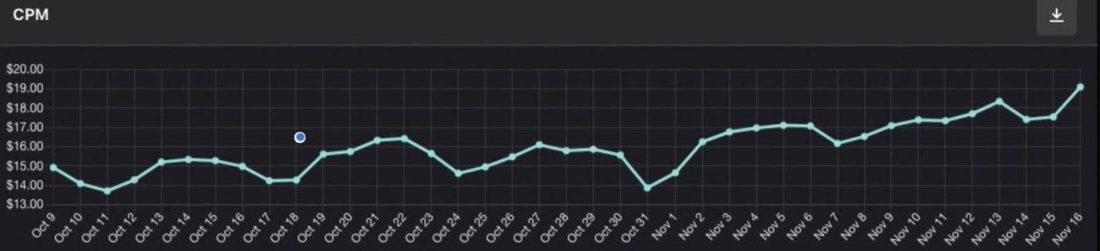
Platform CPM rose 47 percent in 2025 to $7.82 per thousand impressions, the sharpest year-onr-year cost increase of any metric on any major digital channel. Reach became expensive fast. What makes the number worth understanding is what happened next to it.
Cost per acquisition fell and return on ad spend rose over the same period. Costs climbed while efficiency improved, which only happens when better-structured accounts win, and loose ones get priced out.
When reach was cheap, weak targeting was survivable. At a $7.82 CPM, it lands in the P&L immediately, and the gap between disciplined management and set-and-forget spending widens every month.
Why DSP Is Now Table Stakes, Not a Test Budget
DSP’s share of total Amazon ad spend climbed from 17.7 percent to 23.4 percent across 2025 and kept moving toward 25.5 percent. In the first quarter of 2026, DSP clicks grew 156 percent year over year, and for the first time in five years of data DSP came in cheaper per click than Sponsored Products.
A brand still treating DSP as a small experiment funded by leftover budget is already behind the competitors who moved it to the center of the plan.
The New-Customer Engine You Can’t Build on Search Alone
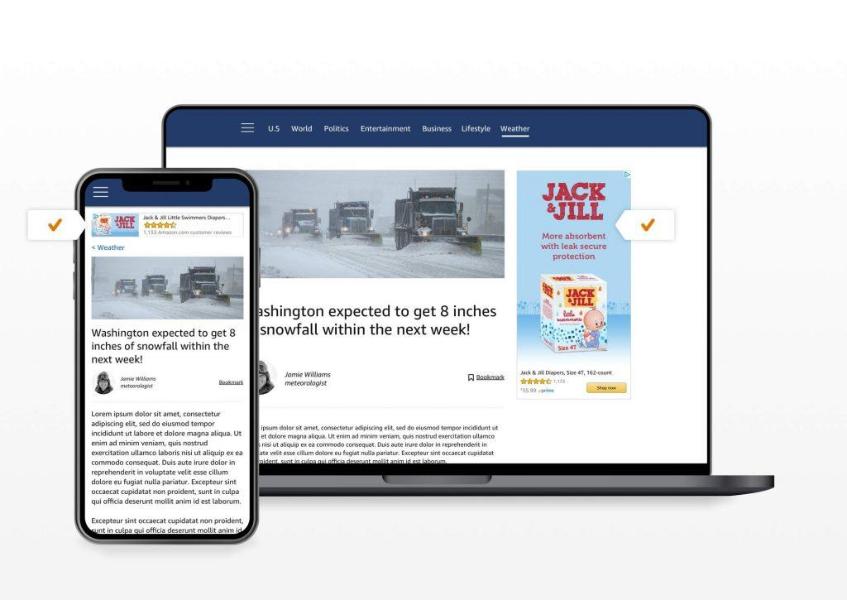
At any given moment, roughly 95 percent of Amazon shoppers are not searching for a given brand’s category. Sponsored Products can never reach that audience, because it captures demand that already exists. DSP reaches the people who have not started looking yet. This is why new-to-brand rate matters more than any single efficiency number.
Across the platform, 36.5 percent of DSP-attributed purchases come from customers who have never bought the brand on Amazon before. Managed with intent, that figure climbs.
SellerApp reports lifting new-to-brand rate above 60 percent of campaign purchases while tripling a brand’s share of voice inside six months. No amount of keyword bidding produces that.
What the Premium Actually Buys You
This is the section that decides everything, because it is where a premium either earns itself or does not.
The tool alone is not the differentiator.
SellerApp will hand you the same platform to run yourself through its do-it-yourself solution if that is what you want. What the premium buys is a strategist who runs that platform against your catalog, your margins, and your competitors, and who catches the money leaking out of the account before the month closes.
Here is what that looks like in practice, mapped to the exact problems the platform was built to solve.
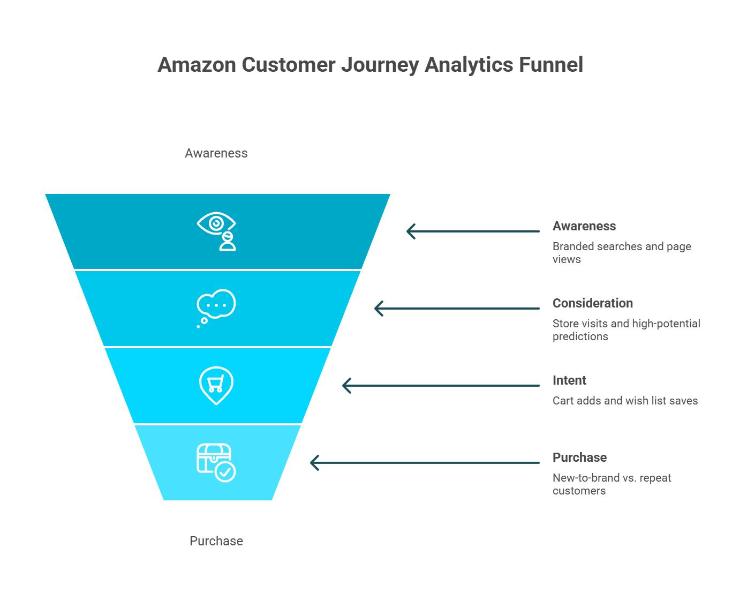
Full-Funnel Planning Built on Category Benchmarks
Real strategy starts with where your category actually sits. Grocery converts at 15.57 percent on a cheap $0.58 click and settles near a 21 percent ACoS. Electronics grinds at 4.60 percent and only works because the basket is large.
Plan without those numbers and you are guessing. A managed service worth its fee maps prospecting, retargeting, and budget pacing against how brands like yours perform, not against a house template built for everyone.
Budget size changes the math too. Under $10,000 a month, DSP access is not even on the table, and ACoS runs 30 to 45 percent. In the $50,000 to $250,000 band, managed DSP becomes viable and the account enters its best efficiency zone at 22 to 32 percent ACoS. The account manager’s job is to know which tier you are in and to build the plan the tier can actually support.
How AMC Attribution Reveals the New-to-Brand Story ROAS Hides
ROAS hands every attributed sale a trophy, including customers who would have bought without ever seeing the ad. It also flatters you while the account bleeds underneath. A campaign can post a strong ROAS while the brand is underwater after FBA fees, storage, ad cost, and refunds.
SellerApp’s platform tracks true profit and TACoS at the ASIN level for exactly that reason, so the strategist optimizes to what stays rather than what came in. On top of that sits Amazon Marketing Cloud.
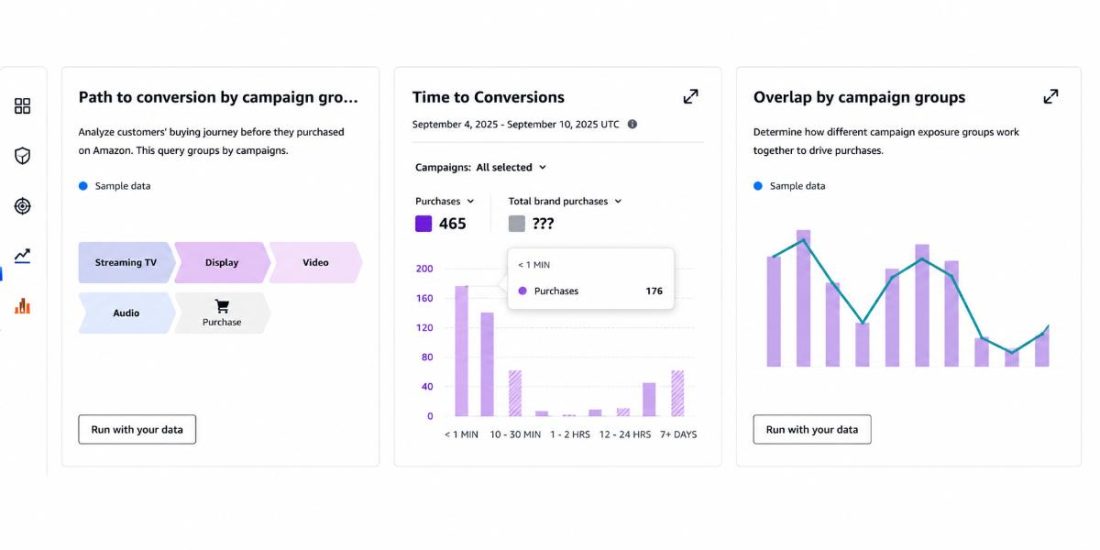
Direct AMC access separates DSP-assisted, DSP-only, and DSP-to-search purchases, and shows the full path to conversion instead of last click. In practice, 42 percent of conversions come through as DSP assisted, which is the part a search-only view erases. Campaign overlap analysis in AMC also shows where your own campaigns are competing for the same shopper, which is the first place a good account manager goes looking for wasted money.
Audience Optimization for the Customers You Don’t Have Yet
Anyone can retarget people who have already viewed your listing. The valuable work is building prospecting audiences from real purchase behavior across hundreds of millions of shoppers rather than renting off the shelf demographic segments. Done properly, it shows in the numbers.
SellerApp’s custom segments have run at 9.38 percent click-through against a 0.47 percent platform norm, and higher click-through lowers effective CPM, which buys more qualified impressions on the same budget.
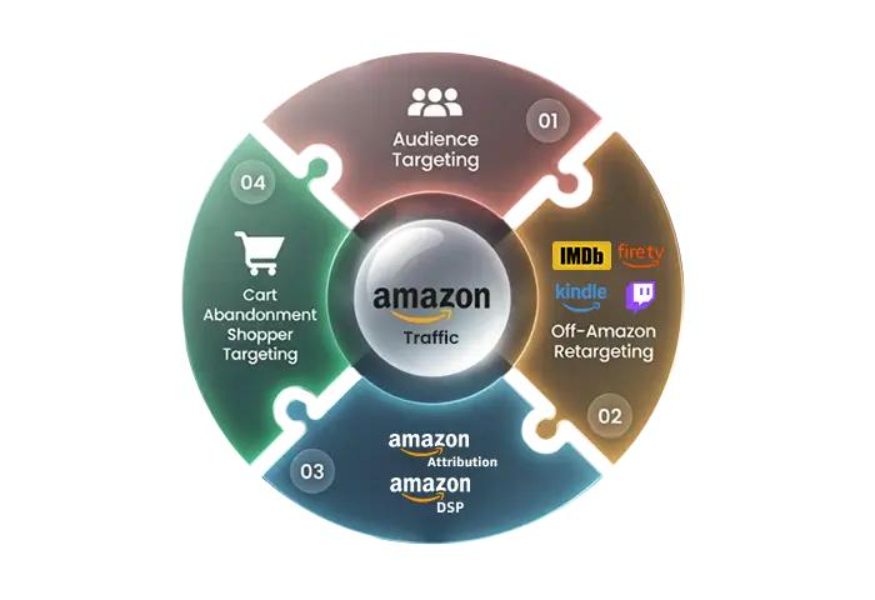
The same discipline applies lower in the funnel. Auto campaigns constantly surface converting search terms and competitor Amazon ASINs that should be moved into controlled targeting, and most of that intelligence sits in a report nobody opens. The account manager captures those signals with the platform’s Keyword and ASIN harvesters and turns them into precise targeting instead of leaving revenue on the table.
Creative, Video, and Seasonal Bid Management
DSP is a creative and video channel, not just a bidding one, and the timing of spend matters as much as the targeting. Amazon Marketing Stream delivers hourly performance data, and dayparting heat maps show exactly when conversions happen and when budget is being thrown away, so spend shifts toward the windows that convert and pulls back when traffic does not.
Season matters just as much. ACoS swings about 4.5 points across the year, from roughly 28 percent in October to 32.5 percent in January, and flat budget plans systematically buy at the expensive peak and skip the cheap trough.

This is also where the account manager recovers money that a thin service never touches. The platform’s Campaign Manager flags in plain view when a campaign is exceeding its target or bleeding budget, and the strategist acts on that before month-end rather than reading about it afterward.
When a winning keyword moves to a controlled campaign, the harvester adds the negative in the source in the same operation, so you stop paying twice for the same click and stop inflating your own CPCs.
The Insights view automatically surfaces search terms carrying impressions and spend with zero orders, and those get cut. None of this is mysterious once someone has the time to watch it, which is the entire point of paying for management. And because the automation runs on schedule with full consistency, saving more than ten hours a week on a 200 campaign account, the senior time goes to decisions rather than busywork.
What all of this adds up to is worth putting in dollars. Take a brand doing two million dollars a year on Amazon. At a 33 percent TACoS, the level TubShroom carried before SellerApp took over the account, that is roughly 660,000 dollars a year going to advertising.
Hold TACoS in the 15 to 17 percent band that SellerApp kept TubShroom in through six months of growth, and the same revenue costs closer to 320,000 dollars. That is around 340,000 dollars a year that stops leaking, on revenue that grew rather than shrank.
The 25 percent ACoS improvement that SellerApp’s workflow automation typically delivers points in the same direction. Results vary by category and account structure, but the mechanism is not a mystery. Money stops going to clicks you pay for twice, to search terms that never convert, and to budget that keeps running after a campaign has stopped earning.
How to Tell Real Management From a Markup
The uncomfortable reality is that plenty of agencies bill premium rates while doing little more than switching on access and emailing a monthly report. A few things separate the real thing from the markup.
What the SellerApp Benchmark Report Reveals About Top Performers
SellerApp’s benchmark report draws on more than 3 billion dollars in managed spend across 33,000 brands and 12 categories, cross-referenced against 28 independent sources. What it shows is that the accounts that win are not the ones with the biggest budgets.
They are the ones run against real category benchmarks, the correct CPM ceiling for the vertical, the new-to-brand rate the category should produce, and the seasonal windows worth exploiting. A capable provider references data like this constantly.
A markup shop cannot, because it has no benchmark book to manage against in the first place. If a prospective partner cannot tell you how your category ought to perform, the management is running blind.
Questions to Ask Before You Sign
- How many accounts does my strategist carry? (30–50 accounts per person leaves roughly half an hour of senior attention on yours each week.)
- How do you measure incrementality, rather than blended ROAS?
- What new-to-brand rate do you target for my category, and where does that number come from?
- Do you build custom audiences from purchase behavior, or rent demographic segments?
- How do you handle budget pacing, especially the October-to-January efficiency swing?
- Can I see the actual report you would send me?
Vague answers to specific questions are the clearest sign you’re buying a markup with a dashboard attached.
Common Ways Brands Overpay for DSP Management
- Paying premium fees for work that never gets past retargeting, the cheapest and least differentiated corner of the channel
- Accepting a flat monthly budget that ignores the seasonal ACoS swing and overspends in the priciest months
- Judging everything on blended ROAS while true profit sits underwater after fees
- Percentage-of-ad-spend pricing, which charges you more precisely as you grow, punishing the outcome you hired the agency to produce
- Self-competition, where two campaigns bid on the same click for weeks because nobody negated the source
Knowing these patterns is the cheapest protection a brand has when walking into any managed service agreement.
How SellerApp Delivers Premium DSP Without the Agency Markup
SellerApp comes at managed DSP from a different starting point than a traditional agency. It is a commerce intelligence company first and a managed service second, so the data leads and the management is built on top of it.
The model is deliberate. Every account gets a dedicated senior strategist whose capacity is kept low enough that they are in the account daily.
The pricing is predictable rather than a percentage of spend that grows as you do. And the service reaches brands most managed DSPs will not touch, sitting below the 35,000-dollar monthly minimum that Amazon’s own managed service generally requires, across 19 Amazon marketplaces from the US, UK, and Germany to Japan, Australia, the UAE, and India, with localized strategy for each.
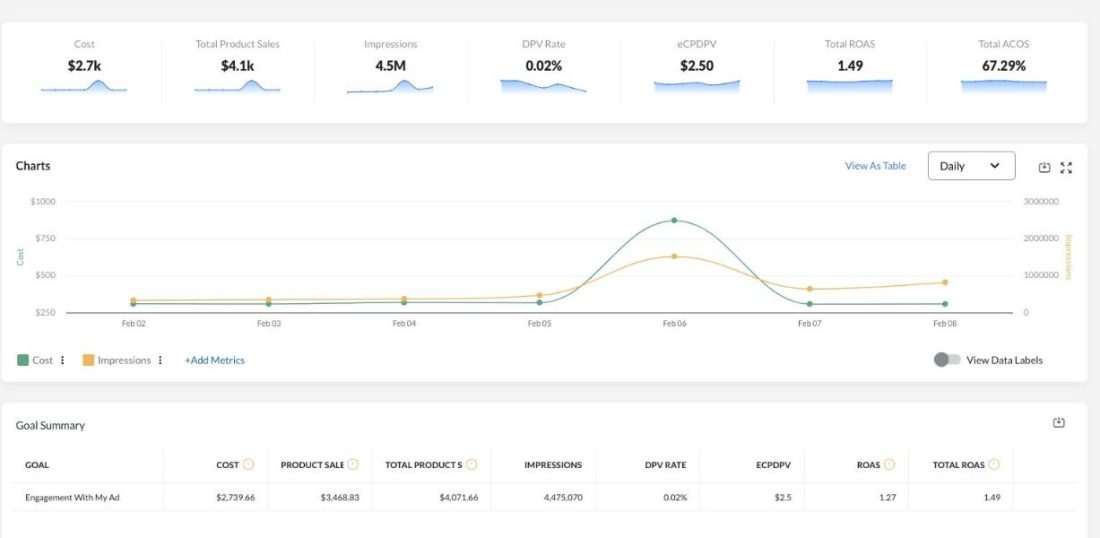
The Data Moat Behind $3B+ in Managed Spend Across 33,000+ Brands
Founded in 2017 and an Amazon Advanced Partner, SellerApp is wired into Amazon Marketing Cloud and Amazon Marketing Stream. That scale is the moat.
When SellerApp runs your account, it is not steered by one team’s instinct or by whatever worked for a different client last quarter. It is benchmarked against how thousands of comparable accounts in your exact category actually behave. A boutique agency, however talented, does not have that reference set, and it is the difference between decisions made on evidence and decisions made on hope.
How SAPI Scores Your Category on the Same Index We Manage Against
SellerApp scores each category from 0 to 100 using the SellerApp Advertising Performance Index (SAPI). The score combines key metrics such as CTR, conversion rate, ACoS, ROAS, CPC, DSP CPM, and new-to-brand potential.
When you engage the managed service, your category is scored on the same index the entire managed book runs on, so strategy is anchored to a measurable environment rather than a hunch. The connection runs deeper than a report.
The same Q1 advertising benchmark data that sits in SellerApp’s published research is fed back into the models that optimize client accounts, which means the category intelligence you read about is the intelligence bidding on your campaigns.
Final Takeaway: When Premium DSP Management Is Worth It
Everything here reduces to one distinction, and it is not the price on the contract.
DSP is worth paying for. The catch is that the same fee buys two very different things.
A premium is worth it when it means a senior strategist who knows your catalog and margins, audiences built from real purchase behavior, results proven through AMC rather than a flattering blended ROAS, and budget watched closely enough to catch waste the week it happens.
It is a waste when it buys a self-serve platform with a monthly report stapled on top, run by a strategist splitting attention across forty other accounts.
So carry one question into every pitch. Is someone actually managing this account with the time and data the channel demands, or are you paying agency rates for a dashboard and a login?
SellerApp will show you the answer for your own account. Book a personalized demo and free waste audit at sellerapp.com and see exactly where your reach and margin are going.
FAQ
1. What is Amazon DSP and how is it different from Sponsored Products?
Sponsored Products shows your ads to people already searching your category. Amazon DSP is programmatic, so it reaches shoppers across Amazon, Prime Video, Twitch, and the web before they search at all. That is its whole value, since roughly 95 percent of shoppers are not searching for you at any moment. It only pays off with daily management, not a set-and-forget build. SellerApp runs DSP with a dedicated senior strategist per account, turning that reach into new customers instead of wasted impressions.
2. How much does Amazon DSP cost to run?
Costs rose sharply. Platform CPM climbed 47 percent in 2025 to 7.82 dollars per thousand impressions, so wasted reach is more expensive than ever. Beyond media, most agencies charge either a flat retainer or a percentage of spend, and the percentage model charges you more as you grow. What actually protects your budget is management that catches waste early. SellerApp prices predictably rather than as a share of spend, and takes brands below the minimum Amazon’s own managed service usually requires.
3. Is Amazon DSP worth it for smaller brands?
It depends on your spend and who runs it. Under about 10,000 dollars a month, DSP access is limited, and efficiency is thin. Between 50,000 and 250,000, managed DSP becomes viable and hits its best efficiency zone. The bigger issue is capacity, since DSP run without daily attention underperforms. SellerApp brings a dedicated strategist to accounts most managed services will not touch, backed by category benchmarks from over 3 billion dollars in managed spend, so smaller brands still get senior-level management.
4. What is a good new-to-brand rate on Amazon DSP?
Across the platform, about 36.5 percent of DSP-attributed purchases come from first-time brand buyers, which already beats what search can deliver. Managed well, it climbs higher. The lever is prospecting audiences built from real purchase behavior rather than off-the-shelf demographics that mostly re-touch people who already know you. SellerApp has pushed new-to-brand above 60 percent on managed accounts using custom audiences that run well above platform-average click-through, so more of your budget reaches genuinely new customers.
5. How do I measure whether Amazon DSP is actually working?
Not by ROAS alone. ROAS credits sales that would have happened anyway and ignores fees, so it can look strong while profit sinks. You need true profit and TACoS at the product level, plus incrementality that separates new demand from repeat buyers. SellerApp tracks profit and TACoS per ASIN and uses Amazon Marketing Cloud to show the real path to conversion, not last click, so you can tell whether DSP is creating growth or just claiming it. Book a demo at sellerapp.com.
The post How Agencies Are Packaging Amazon DSP as a Premium Managed Service appeared first on SellerApp Blog.
from SellerApp Blog https://ift.tt/1iwM927
via IFTTT
Add a review