
How to Get Ungated on Amazon: A Complete Guide
Descriptions
If you view competition as a gateway to unlocking profitable, untapped niches, then it’s time to learn how to get ungated on Amazon. Understanding what does ungated mean on Amazon and how to get ungated on Amazon is essential if you want to expand into profitable niches and brands that most sellers can’t access.
Amazon uses gating as a safeguard, limiting access to specific brands and product types to ensure authenticity, compliance, and buyer safety. That’s why some listings are wide open while others require special approval before you can sell.
Let’s take a quick look at what Amazon gating is, why it exists, and how sellers can navigate it to unlock restricted selling opportunities.
Quick Guide:
- What is an Amazon “Gated” Category?
- Why Are Some Categories on Amazon “Gated”?
- How to Quickly Identify a Gated or Ungated Product Without an Amazon Seller Account
- Requirements for Amazon Ungating
- Ungating Fees on Amazon (What Sellers Actually Pay)
- How to Reduce Ungating Costs?
- How to Get Undated on Amazon in 4 Steps
- What are the most effective strategies for overcoming Amazon ungating request denials?
- Final thoughts
What is an Amazon “Gated” Category?
When you start selling on the Amazon marketplace, you might notice that while some categories are open for immediate listing, others require approval before you can sell in them with a tag saying ‘you need approval to list in this brand’. These restricted categories are called Amazon “gated categories.”
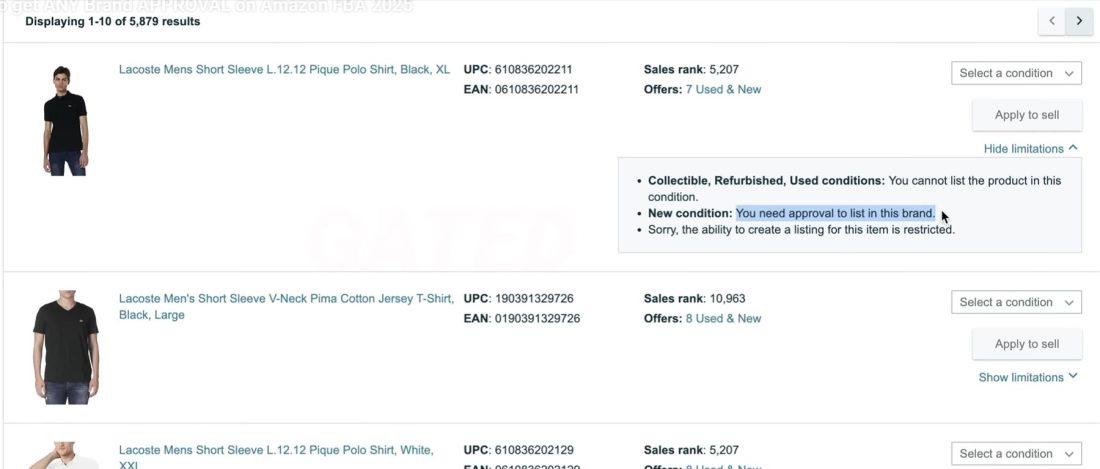
In simple terms, a gated category is one that requires verification or approval before it goes live. So, before you can list or sell products in that category, you must apply for approval. This process is often referred to as ‘ungating’ on Amazon.
So, before knowing how to get ungated on Amazon, let’s take a look at what ungated means. Being “ungated” on Amazon means that you’ve received Amazon’s permission to sell in a previously restricted (gated) category, brand, or product type.
Sellers who complete this 4-step process successfully are said to have gotten ungated.
Why Are Some Categories on Amazon “Gated”?
Amazon doesn’t gate categories just to make it difficult for you to list products. It aims to protect both customers and the integrity of its marketplace by introducing the rules of gating.
Over the years, Amazon has evolved from a general ecommerce marketplace into a trust-based buying-selling ecosystem, where buyer confidence directly influences conversion rates, repeat purchases, and brand reputation.
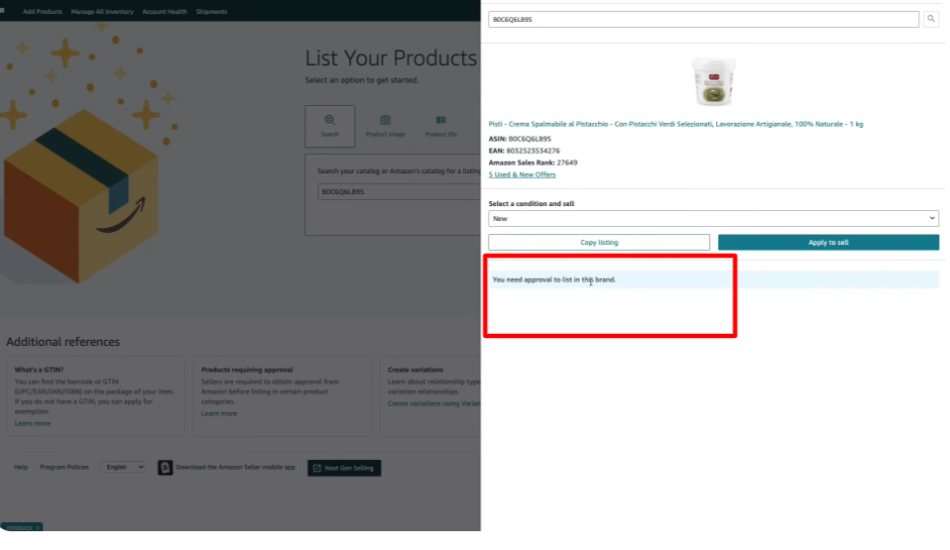
So when sellers talk about getting ungated on Amazon or search for guides on how to get ungated on Amazon, what they’re really trying to do is earn Amazon’s trust to sell in these restricted spaces.
1. Quality and Authenticity Control
Amazon takes product authenticity seriously. Categories like Luxury Beauty, Automotive Parts, Collectibles, and High-end Electronics are prone to counterfeit or imitation products that can mislead customers and damage brand credibility.
By gating these categories, Amazon ensures that only sellers who can prove their sourcing and supply chain legitimacy are allowed to list. To become eligible, sellers often have to provide invoices from authorized distributors or brand letters of authorization.
2. Brand Protection
Amazon’s marketplace hosts thousands of global brands, from small private labels to Fortune 500 companies. However, with that visibility comes the risk of unauthorized resellers listing gray-market or counterfeit goods.
To combat this, Amazon gates well-known brands like Apple, Nike, or LEGO under strict approval processes. The aim is to ensure that only vetted sellers with authentic sourcing documentation can list products from these companies.
3. Regulatory Compliance
Certain product categories are governed by federal safety, health, and labeling regulations. For instance, categories like Grocery & Gourmet Food, Baby Products, and Health & Personal Care require sellers to adhere to FDA or similar regional standards.
This is another major reason why sellers must apply for ungating on Amazon. Before allowing listings in these sensitive areas, Amazon needs proof that your products are safe, properly labeled, and sourced through compliant channels.
4. Customer Experience and Marketplace Integrity
By controlling access to certain categories, Amazon ensures consistent quality standards across its listings. Gating also helps maintain strong seller performance metrics, since only compliant and trustworthy sellers can participate in regulated categories.
This system reduces fraudulent listings, minimizes product returns, and maintains an overall positive customer experience.
In turn, sellers benefit from operating in a more credible environment, where legitimate, ungated items on Amazon or ungated products to sell on Amazon can perform well without being overshadowed by non-compliant competitors.
If you’re looking into how to get ungated on Amazon, this will help you spot high-barrier categories and brands. So, here are some major categories and product types that often require “ungating” before you can sell them.
| Category | Why It’s Gated | Product Examples |
|---|---|---|
| Baby products & children’s goods | High safety and regulatory requirements. Contains small parts and may cause choking hazards. | Toys for kids under 3 years of age, baby car seats, high chairs for toddlers, and feeding bottles. Sellers report getting newly gated even after listing. |
| Jewelry / Watches / Luxury goods | Counterfeiting risk is high. For jewellery, authenticity might be questionable. | Precious gems or metal items, luxury watch brands, designer handbags. |
| Health, Personal Care & Supplements | FDA, health claims and other regulatory raising safety concerns. Amazon can only allow this once your safety claims are authorized by multiple credible sources. | Vitamins, weight-loss supplements, beauty products and wellness gummies making medical claims. |
| Automotive Parts & Accessories | Safety liabilities are imposed on brakes, airbags, engine components of vehicles along with regulatory controls. Amazon checks compliance reports before listing is updated. | Performance parts, replacement safety-critical components. |
| Grocery, Food & Beverage | Perishables food often come with regulatory measures. Imported foods may conflict the rules of the country it is being sold in. | Packaged food, refrigerated items, imported gourmet goods. |
| Collectibles / Fine Art / Sports Memorabilia | Authenticity, provenance, high value, theft/counterfeit risk may be associated with this category. | Autographed items, rare prints, high-value trading cards. |
| Electronics & Accessories (some subsets) | Safety compliances, IP issues, etc. are always associated with electronic goods. | Wireless chargers, battery-powered devices, imported accessories. |
| Brands with strict controls | Even within otherwise open categories, certain brands are gated because of IP/authorized reseller agreements. | Big names such as LEGO, Apple, Nike reportedly being gated in forums. |
How to Quickly Identify a Gated or Ungated Product Without an Amazon Seller Account
Before you start selling, it’s crucial to understand what does ungated mean on Amazon and how to identify whether a product or brand needs approval. Not every product is freely available to sell on this highly regulated marketplace.
So, here’s how you can identify an ungated product without needing an Amazon Seller Account.
1. Analyze the Amazon Product Page to Hava a Better Gauge
One of the simplest ways to find ungated products on Amazon is by closely inspecting the product listing itself.
If you’re wondering what to focus on, check the category section under the product title. If the category falls under high-risk segments such as Beauty, Automotive, Health & Personal Care, Jewelry, or Grocery, it’s often gated. So, if it falls under any of these categories, take a note of it.
On the other hand, items under Home & Kitchen, Books, or Sports & Outdoors are usually part of ungated categories on Amazon.
This quick check helps you understand the list of ungated products on Amazon, especially if you’re new and researching the best ungated products to sell on Amazon before creating your account.
2. Use Product Research Tools That Indicate Gating
Even if you don’t have a seller account, free tools or subscription tools offering a ‘freemium’ can help you spot whether a product is gated. These can guide you when getting ungated on Amazon later or when finding ungated products to sell on Amazon right now.
These can also come in the form of Chrome extensions can be used directly on product pages to identify gated items. Amazon has its very own Seller Central Add-on Tools that makes identifying ungated brand on Amazon easy.
3. Cross-Check With Public Gated Category Lists
Amazon’s restricted categories are widely documented. These public databases are a goldmine for anyone learning how to ungate on Amazon or building a sourcing plan around ungated items to sell on Amazon. Even SellerApp has previously published blogs on this topic. Find it here if you need a quick check.
4. Use Seller Forums and Community Insights
Even if you’re not an active seller, forums like Reddit’s r/AmazonSeller and Amazon’s own Seller Central forums are full of discussions on ungating on Amazon and category restrictions.
These discussions reveal which products and brands are open for new sellers, helping you refine your list of ungated products on Amazon and understand real-world seller experiences in getting ungated on Amazon.
5. Research Brand Restrictions
Even within ungated categories on Amazon, specific brands may still be restricted. For instance, luxury or high-demand names like Apple, Nike, or LEGO are considered gated.
Check brand websites or authorized distributor policies, if they require proof of authorization, that’s a clear sign that the brand is gated. If you want to sell similar items without approval, look for ungated brands on Amazon offering comparable alternatives.
This research will help you diversify your inventory with ungated products to sell on Amazon while preparing for what is ungating on Amazon when you decide to expand into restricted brands later.
6. Watch YouTube Tutorials and Seller Walkthroughs
YouTube is full of experienced sellers explaining how to get ungated on Amazon, how to ungate on Amazon, and how to find ungated items on Amazon to sell right away.
These creators often show real product examples and category checks in live sessions, giving you practical visibility into what is ungated on Amazon versus restricted categories. It’s one of the most effective free ways to learn how do you get ungated on Amazon and identify opportunities.
7. Start by Reverse-Engineering From Ungated Categories
If you’re new and not yet ready to go through ungating on Amazon, start from categories already open to everyone.
Some of the best ungated products to sell on Amazon come from:
- Books
- Home & Kitchen
- Office Supplies
- Pet Supplies
- Sports & Outdoors
- Tools & Home Improvement
These are perfect entry points for beginners because they include a wide range of ungated items on Amazon that don’t require documentation or approval.
8. Confirm Through Amazon’s Public Help Page
Even without an active seller account, you can access Amazon’s official documentation outlines the categories needing approval and which are open. Head over to this page to know more.
Is it mandatory to get ungated before selling gated products?
Yes, it’s mandatory to get ungated before selling gated products on Amazon.
If you try to list or sell a gated product, brand, or category without approval, Amazon will, either put a hold to your listing immediately, where you’ll see “Apply to Sell” or “Restricted Product” or flag your account for policy violations.
So, you must get Amazon’s approval before selling restricted products to stay compliant and maintain your Amazon account health.
Requirements for Amazon Ungating
The exact requirements for getting ungated on Amazon vary by product type, brand, and category, but they generally aim to verify product authenticity, supplier legitimacy, and compliance with Amazon’s policies.
Here are top ungating requirements:
For Professional Seller Account
You must have a Professional Amazon Seller Account before you can even apply to get ungated.
For Invoices from Authorized Suppliers
One of the most important steps in what is ungating on Amazon involves submitting invoices.
Typically, Amazon asks for at least three invoices dated within the past 180 days, showing 10 or more units of the product purchased from an authorized wholesaler or manufacturer. These invoices must match the brand and product you’re applying to sell.
For Compliance Documentation
Certain gated categories such as Topicals, Supplements, Toys, and Grocery require compliance certificates such as FDA approval, safety data sheets, or child safety test reports. These are essential to ensure you meet Amazon’s regulatory and product safety standards.
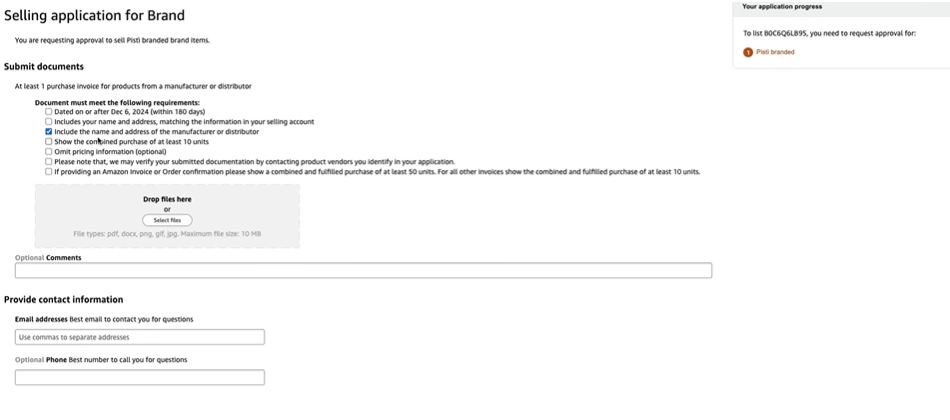
Here are the certificates / test-reports / documentation types you may be asked for:
| Document / Certificate | Typical Use Case |
|---|---|
| Children’s Product Certificate (CPC) | Products made for children under U.S. regulations (toys, children’s apparel, playground equipment, etc). |
| General Certificate of Conformity (GCC) | When products (not necessarily children’s) require compliance with U.S. consumer product safety rules (e.g., general household items). |
| Test Reports / Laboratory Reports | To show that the product has been tested according to required standards (electrical safety, chemical content, flammability, etc). |
| Declaration of Conformity (DoC) | Often used in Europe/UK, for products meeting EU/UK regulatory standards (e.g., CE marking, REACH, RoHS). |
| Safety Data Sheets (SDS) / Material Safety Data Sheets (MSDS) | Products containing chemicals, hazardous materials, or items subject to transport/storage regulations (hazardous goods, aerosols, batteries). |
| Brand Authorization Letter / Supplier Authorization | For gated brands or restricted brands (you need proof you are authorized to sell that brand). |
| Clear Product Label Images / Tracking Labels | Amazon may ask for images showing label, packaging, manufacturer name, tracking barcode, country of origin, etc. |
| Purchase Invoices from Authorized Suppliers | To show you sourced inventory legitimately, especially for gated categories/brands. |
| Regulatory Permits / Certifications | For certain categories, food, dietary supplements, cosmetics/topicals, medical devices, you may need regulatory permits (e.g., FDA registration, OTC device approvals). |
To improve your chances of getting ungated on Amazon, your account should have good performance metrics, low late shipment rates, minimal order defects, and positive customer feedback. Amazon uses this data to gauge whether you can maintain marketplace quality.
For Product Images & Listings that Match Requirements
Amazon may also ask for high-resolution product images showing clear labels, branding, and packaging to confirm authenticity.
Once you meet these standards, you’ll be eligible to sell in some of the best ungated products to sell on Amazon.
Ungating Fees on Amazon (What Sellers Actually Pay)
When sellers start exploring how to get ungated on Amazon, one of the first questions they ask is “Does Amazon charge an ungating fee?”
The short answer is, not officially.
Amazon itself doesn’t charge a set “ungating fee,” but getting ungated often comes with indirect costs like supplier purchases, documentation, and sometimes third-party service charges.
Let’s break down what these fees really look like, based on real experiences.
1. Upfront Inventory Purchase Costs
Most costs associated with getting ungated on Amazon come from buying inventory to meet the platform’s documentation requirements. But how is that counted as an expenditure? To approve your application, Amazon requires invoices showing that you’ve purchased a minimum quantity (typically 10–200 units) from an authorized distributor or manufacturer.
However, sellers on forums report that Amazon has become much stricter.
One seller shared that they had to purchase 200 units of a single SKU to get ungated in the Beauty category. Another mentioned spending over $1,000 on skincare products just to submit acceptable invoices.
If your supplier charges $10–$20 per unit, your total investment could range between $1,500–$4,000 or more before even receiving approval. And if your invoices are rejected, that money is sunk into inventory you can’t sell on Amazon.
This is why many sellers looking for how to get ungated on Amazon for free try to minimize risk by sourcing low-cost, compliant items or focusing first on ungated categories on Amazon before expanding.
2. Third-Party “Ungating Services”
A growing number of sellers use third-party ungating services to streamline the process. These services promise quick approval by helping with paperwork or sourcing documentation. However, most of these providers charge between $50 and $200 per category, and their legitimacy varies widely.
While they may save time, they come with major risks. Many sellers on Reddit warn that some of these services use fake invoices or unauthorized sources, which can lead to account suspension later.
So if you’re wondering how to ungate on Amazon safely, always prioritize legitimate suppliers and documentation over shortcuts. No “service” can guarantee approval and certainly not risk-free.
3. Official Fees in Specific Categories
While most categories are free to apply for, some specialized or high-value categories do have official ungating fees. For instance, Fine Jewelry and Collectibles are known to require non-refundable fees of up to $5,000 to apply.
These fees exist to protect the marketplace from counterfeiters and ensure that only sellers with verified supply chains can list high-risk or premium products. So while you might not pay a direct “Amazon ungating fee” for common categories like Grocery or Beauty, niche segments with higher authenticity concerns can be expensive to enter.
4. Hidden and Opportunity Costs
Even without a formal fee, ungating on Amazon can still be costly in terms of risk and opportunity loss.
- Rejected applications: If Amazon doesn’t accept your invoices, you’re left with unsellable inventory.
- No refunds from suppliers: Many wholesalers won’t take back inventory once sold.
- Time loss: Each rejection delays your ability to start selling profitable products.
One seller put it best as “All the wholesalers I contacted refused refunds if we got denied. That meant losing both the money and the stock.” This highlights the importance of choosing reliable distributors, double-checking documentation, and understanding what does ungated mean on Amazon before investing heavily.
So, How to Reduce Ungating Costs?
If you’re just starting out and want to know how do you get ungated on Amazon without losing money, here are some smart ways to minimize cost and risk:
- Start with low-risk or ungated products on Amazon. Build account credibility before applying for gated categories.
- Buy in smaller quantities from verified suppliers who issue Amazon-acceptable invoices.
- Avoid services offering “instant approval.” Many rely on fake documents that can lead to suspension.
- Check the latest seller discussions to understand category-specific invoice requirements (these can change frequently).
- Keep all documentation organized. Authentic invoices, letters of authorization, and compliance certificates are your best insurance against rejection.
How to Get Undated on Amazon in 4 Steps
Understanding how to get ungated on Amazon can unlock access to profitable, high-demand categories and premium brands that most sellers can’t touch. While the process may feel complicated at first, ungating on Amazon is simply about proving that you’re a legitimate seller with verified suppliers and authentic products.
Here’s a detailed, step-by-step breakdown of how to ungate on Amazon successfully — whether you’re applying for restricted categories, brands, or specific product types.
Step 1: Set Up a Professional Seller Account
Before applying for any gated category, you must have an Amazon Professional Seller Account. Amazon requires this level of account for all sellers who want to apply for ungated categories on Amazon or sell ungated brands on Amazon.
A Professional account not only gives you access to tools like bulk listings and inventory management but also shows Amazon that you’re a serious business. Without this upgrade, your application for ungating on Amazon will be automatically rejected.
Step 2: Build a Strong Seller Record
Before applying for approval, ensure your seller metrics are healthy. Amazon favors accounts with strong sales history, minimal customer complaints, and consistent fulfillment performance.
To improve your chances of getting ungated on Amazon, focus on:
- Maintaining low order defect rates (under 1%)
- Keeping late shipment rates below 4%
- Earning positive feedback and reviews
If you’re new, start by selling in ungated categories (like Books, Home & Kitchen, or Pet Supplies). This helps establish credibility before applying for gated ones. Once your account has a stable history, you’ll find it easier to access more ungated products on Amazon and get approvals faster.
Step 3: Source from Authorized Distributors or Manufacturers
This is the most critical step in how to get ungated on Amazon. Amazon requires you to submit invoices or authorization letters proving that your products come from legitimate, verified sources.
Here’s what to do:
- Find an authorized distributor or brand wholesaler (avoid retail stores or online marketplaces).
- Purchase 10 or more units of the product you want to sell.
- Ask for an invoice that includes your business name, address, date, quantity, and supplier contact details.
- Make sure the information matches your Amazon Seller Central details exactly. Amazon typically asks for invoices dated within 180 days, so keep them recent.
If you’re wondering how do I get ungated on Amazon for specific brands like Nike or Apple, this is the key step. These brands require stricter verification, and only official supply-chain documentation will help your case.
Step 4: Submit Documents for Amazon’s Approval
Once you’ve gathered all required documentation, it’s time to apply for ungating. Follow these steps to initiate it.
- Go to your Seller Central dashboard
- Attempt to list a product.
- Request approval. If automatic ungating does not occur, you will be prompted to apply to sell the product. So, press the “request approval” button.
- Recognize the requirements needed for approval. This differs from category to category. Among those requirements, invoice is a common factor all across. So, upload and submit the prepared invoice PDF to Amazon for review.
- Add compliance certificates and Product images and request for approval.
Note:
- It is completely normal to be declined a few times, as Amazon is ensuring the platform remains clear of counterfeit items. Many sellers report being approved only after the 3rd or 4th submission.
- Keep your invoices under 180 days old. Outdated invoices are a common reason for automatic rejection.
- Maintain consistency across details. Ensure your Amazon account address matches your invoice address exactly.
Amazon will then review your submission, which typically takes 1–5 business days. If everything checks out, your listing will be approved, and you’ll have access to ungated items to sell on Amazon.
What are the most effective strategies for overcoming Amazon ungating request denials?
Here’s how to overcome ungating request denials effectively and improve your chances of approval.
1. Resubmit with Updated Documentation
Each time Amazon denies your ungating request, resubmit your documents. Rename and update the file before uploading.
For instance, instead of reusing “Brand_Invoice.pdf,” rename it to “Brand_Invoice_10-25-2025.pdf.”
Note: Amazon’s automated review systems may automatically filter out repeated file submissions, but renaming signals a new and updated application.
2. Add Tracking and Delivery Proof
If your first submission (usually just an online order confirmation) gets denied, strengthen your next submission by attaching shipping tracking details and delivery confirmation. This shows that your purchase was legitimate and completed successfully.
Sellers often find this step crucial in the second or third round of submissions, as it offers Amazon tangible proof of product receipt.
3. Include Product Images for Credibility
Amazon’s verification team often needs proof that you physically possess the products. Take a clear photo of the item, ideally next to the invoice or packing slip, and include it in your file. This reassures Amazon that you’re not relying on counterfeit or virtual documentation.
4. Adjust File Order for Automated Reviews
If Amazon denies your request without a specific reason (a common occurrence), tweak the structure of your submission. For example, move your product photo before the invoice or change the order of tracking and delivery confirmations. This helps Amazon’s automated tools register your file as a new submission and forces a fresh review.
5. Annotate or Highlight Correct Information
When Amazon provides an incorrect or unclear rejection reason, such as mismatched addresses or quantity discrepancies, annotate your invoice directly. Use a free PDF editor to circle or highlight the correct details (like the 10 units purchased or the matching shipping address). This visual clarification speeds up the human reviewer’s understanding and helps correct false denials.
6. Maintain Supplier Authenticity
Amazon prioritizes invoices from brand-authorized or wholesale distributors. Avoid gray-market or retail invoices, as they’re often rejected outright. Before applying, confirm that your supplier is verified or recognized in Amazon’s network. Sellers on forums like Seller Central and Reddit emphasize that approval rates increase drastically when invoices come from reliable, traceable sources.
Final thoughts
Amazon’s gating system isn’t meant to discourage sellers. Rather, it’s designed to protect the marketplace, uphold authenticity, and sustain consumer trust. For sellers, learning how to ungate on Amazon is an opportunity to grow beyond beginner-friendly categories and access premium, high-demand markets.
Once you’ve been approved to sell ungated products on Amazon, the next step is maximizing visibility and conversion. That’s where SellerApp’s Amazon PPC Agency comes in. it helps you turn every newly unlocked category into a revenue-generating opportunity. With AI-backed ad optimization, real-time performance tracking, and expert campaign management, SellerApp ensures your listings dominate search results and scale profitably across competitive niches.
By understanding what is ungating on Amazon and pairing it with a data-driven ad strategy, you’ll not only expand your product catalog, you’ll build a brand that consistently wins visibility, clicks, and conversions. In a way, not only you access and untapped category for better sales but using the Amazon PPC Ads you can stay on top of their minds, maximizing chances of conversion.
Read More:
How to find the best selling amazon products with the greatest profit for FBA!
Selling Seasonal Products on Amazon to Maximize Profit Potential
How to Sell Digital Products on Amazon
The post How to Get Ungated on Amazon: A Complete Guide appeared first on SellerApp Blog.
from SellerApp Blog https://ift.tt/Qd2NwSr
via IFTTT
Add a review