
TikTok Shop Affiliate Marketing: How Creators and Sellers Actually Make The Big Bucks
Descriptions
TikTok Shop affiliate marketing isn’t successful because creators have suddenly become better marketers; it’s successful because TikTok integrated three historically separate steps. Namely, discovery, persuasion, and checkout into a single scroll event.
According to market research intelligence, eMarketer estimates that TikTok Shop alone is on track to account for nearly one-fifth of all U.S. social commerce sales in 2025, having already driven $15.8 billion in U.S. sales in 2024 and growing fast. This is one of the major reasons why brands using TikTok as an acquisition channel collectively bring in XYZ.
Unlike traditional affiliate models that rely on external links, cookies, and off-platform friction, TikTok Shop completes transactions directly within the feed, at the exact moment intent peaks.
What makes this even more powerful is how the “For You” feed rewards affiliate-native behavior, such as letting the product show up naturally as part of what’s happening on screen, using it the way an actual person would, and letting people ask “Where did you get that?” in the comments instead of telling them to buy.
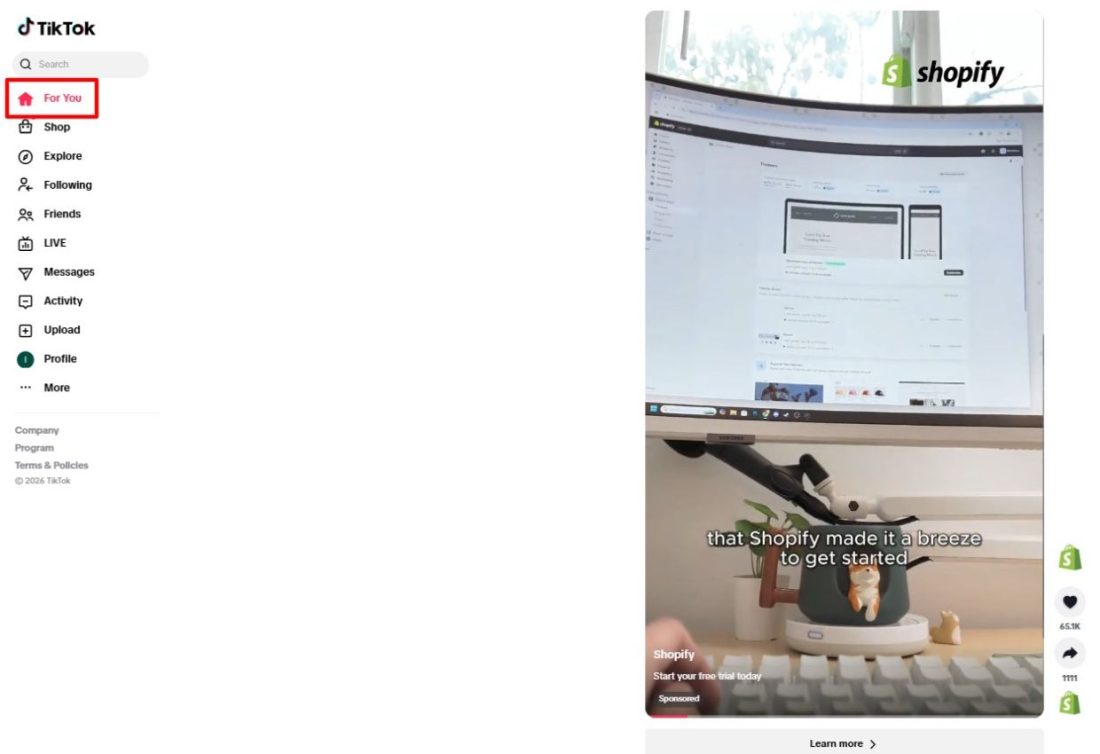
When a video has a TikTok Shop product tag, TikTok does not rank it the same way it ranks a traditional ad or an external link. Videos that demonstrate use, show outcomes, or answer objections visually go further than link-in-bio posts ever could on Instagram or YouTube Shorts.
As a seller, when you look at TikTok Shop affiliate marketing program over time, the advantage for sellers is not recruiting more creators or increasing the number of videos published. The advantage comes from how the work is divided. Creators test different hooks, ways of speaking, and content formats across a wide range of audiences. Sellers concentrate on decisions over which they have direct control, such as inventory availability, pricing, and commission rates.
Brands can track which producers routinely generate sales, which content types reoccur, and which commission levels result in persistent posting early on. Over time, this results in an affiliate system that generates consistent revenue, despite the fact that creators own the audience and content, not the brand.
Quick Guide:
- What is TikTok Shop affiliate marketing?
- Eligibility & Setup for TikTok Shop Affiliate Marketing
- Choosing Products That Actually Sell on TikTok Shop
- Content That Actually Converts in TikTok Shop Affiliate Marketing
- Ads for TikTok Affiliate Shops
- Compliance, FTC & Best Practices
- Final Thoughts
What is TikTok Shop affiliate marketing?
TikTok Shop affiliate marketing program is a system where creators promote products directly inside TikTok videos or livestreams using a product tag. Unlike traditional affiliate links, which send traffic off-platform, TikTok Shop keeps the purchase within the app, so viewers can buy instantly. The platform automatically tracks sales, and creators earn a commission for every completed order.
The difference is that TikTok rewards content that naturally demonstrates the product, rather than just linking to it. Think product-in-hand demos, problem–solution stories, and creator POVs that feel native to the For You feed.
For sellers, it is important that they choose the right creator for their brand. Collaborating with a fitness creator for your makeup products will not help your product reach the right audience. Instead, if you are promoting a chemical-free deodorant that absorbs sweat with natural ingredients like alum, it can help you reach the right audience.
Now the question is, who sets the commission? It is the sellers. They adjust it based on the category, product pricing, and strategic goal. The commission rate starts at 10-15% for creators who post infrequently or test products quickly. 20-30% often attracts creators who produce multiple videos, detailed demonstrations, and recurring series.
But the low commission works for certain categories, such as fast-moving consumer goods (FMCG) and home gadgets, because conversions are easier to show visually. Whereas beauty tools and electronics have higher commission rates, as creators focus more on storytelling and repeat posts.
We’d recommend tracking creator output relative to commission rate. A small increase in commission often generates a 3x-4x increase in total content posted, without changing the product itself.
For example, a U.S. beauty brand increased commission from 12% to 25% for 30 creators. Posting frequency increased from 1–2 videos per creator to 4–5 per creator in 21 days, driving 3.2× higher revenue per creator.
Two collaboration types for the TikTok shop affiliate marketing program
Let’s first understand the fundamentals of affiliate marketing.
From a cost perspective, TikTok Shop affiliate marketing is one of the few growth channels where sellers never prepay for reach. There are no clicks, impressions, or views to buy; only completed orders generate cost. This shifts risk away from the seller, but it also means that performance depends heavily on how easily your product can be understood and demonstrated on camera. The product has to be visually appealing to be sold because the affiliates can only create the pathway for you.
For example, a U.S.-based home organization brand selling acrylic fridge bins experienced this trend in Q4 2024. Instead of sending traffic to a Shopify PDP, they enabled TikTok Shop tagging. A single creator with precisely 78K followers posted a 22-second “restock my fridge” video, tagging the product. The video received 1.3 million views in 6 days, drove 4,860 in-app orders, and achieved a 2.9% conversion rate, all without a single link click. The same product had previously converted at under 1% when promoted via “link-in-bio” Instagram stories.
Commission signaling is evident in creator behavior. A beauty brand offering 12% commission averaged 1–2 test videos per creator, with most being posted once and then abandoned. When the same brand increased the commission to 25% for a targeted cohort of 30 creators, average output per creator jumped to 4.6 videos over 21 days, including comparison videos and routine integrations. Revenue per creator increased by 3.2 times, not because the product changed, but because creators invested more effort once the upside became meaningful.
Consider a kitchen gadget seller that onboarded 112 affiliates in early 2025. Roughly 60% never produced a second video, and 27% never generated a single sale. Total cost for those non-performing affiliates: $0. All spending was tied to the remaining 18 creators, who collectively generated $412,000 in GMV and paid out $92,000 in commissions, resulting in an effective blended CAC far below what the brand had previously seen with paid TikTok ads.
Also, product demo-ability is non-negotiable. A supplement brand with strong Amazon sales struggled on TikTok Shop despite high commissions (30%). Creators couldn’t visually demonstrate results, leading to sub-0.5% conversion rates.
In contrast, a $29 LED cleaning brush is easy to demonstrate and has an immediate visual payoff, consistently hitting 4–5% conversion rates across affiliate videos, even from creators with fewer than 50,000 followers. Affiliates gravitated to the brush organically, while the supplement required constant outreach and incentives.
Open Collaboration & Target Collaboration
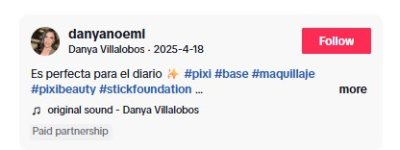
Open collaboration: This is best understood as a marketplace for discovery. By making your product available to any eligible creator, you increase the visibility of your product with creators producing more videos, more formats, and more angles.
This is where sellers learn how the product is naturally positioned by creators, what hooks they use, what objections appear in comments, and which audiences respond. Open collaboration is most valuable early, when the goal is to hint your product to the right audience.
Target Collaboration: This is where sellers regain control. Instead of waiting for the right creators to find your product, you choose them and adjust commission rates accordingly. Higher commissions take place. You’re compensating creators for consistency, brand-safe messaging, and repeated exposure. This is where affiliate marketing shifts. You are not experimenting anymore but rather building your brand infrastructure in the marketplace.
The mistake many sellers make is treating these two modes as interchangeable. Open collaboration is for learning and reaching. Target collaboration is for predictability and scale.
In practice, the most effective TikTok Shop affiliate marketing strategies run both simultaneously: open collaboration feeds insight and optional upside, while targeted collaboration builds a dependable revenue layer that compounds over time.
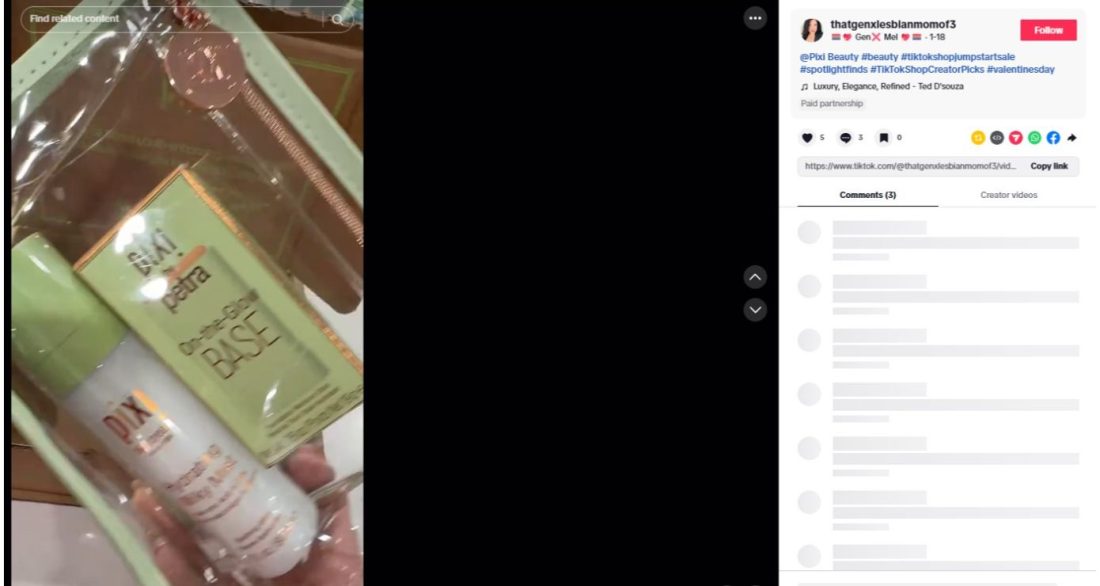
To better understand it, consider a mid-sized U.S. personal care brand that launched open collaboration in early 2025 with a $24 hair tool. Within 30 days, 214 creators posted at least one video. Only 19 creators generated more than 80% of the total sales, but the brand learned exactly how the product should be sold.
Morning-routine POVs outperformed reviews by 2.4 times, and videos framed around “time saved” converted 31% higher than those focused on beauty. None of this insight came from ads; it came from open-access experimentation.
That same brand then moved those 19 creators into Target Collaboration, increasing commission from 15% to 28%. Posting frequency stabilized from “one-off” uploads to an average of 3.8 videos per creator per month, and revenue variance dropped sharply. Weekly affiliate revenue fluctuated within a ±12% range, compared to ±47% during the open-only phase. Predictability, not virality, became the primary win.
Control becomes even more visible at scale. A home goods seller selling a $39 kitchen organizer allowed open collaboration year-round but capped the number of target partnerships at 40 creators. Those 40 creators produced only 22% of total affiliate videos yet generated 61% of total affiliate GMV over a 60-day window. Target creators reused approved hooks, avoided misleading claims, and filmed repeat demos instead of chasing trends.
The most effective sellers actively transition creators between modes. A fitness accessories brand tracked open-collaboration creators who hit $5,000+ GMV in 14 days or posted 3+ converting videos. Once moved into target collaboration, the average order volume per creator increased by 2.1 times, even without additional seeding. The shift wasn’t driven by traffic; it was driven by incentives and expectations.
Running both systems in parallel prevents dependency risk. During a February 2025 algorithm volatility window, one apparel brand experienced a surge in sales from open-collaboration creators, driven by trend alignment, which offset a temporary dip caused by two top target creators who paused posting. Because both systems were active, weekly revenue still increased by +9% MoM, rather than declining.
Eligibility & Setup for TikTok Shop Affiliate Marketing
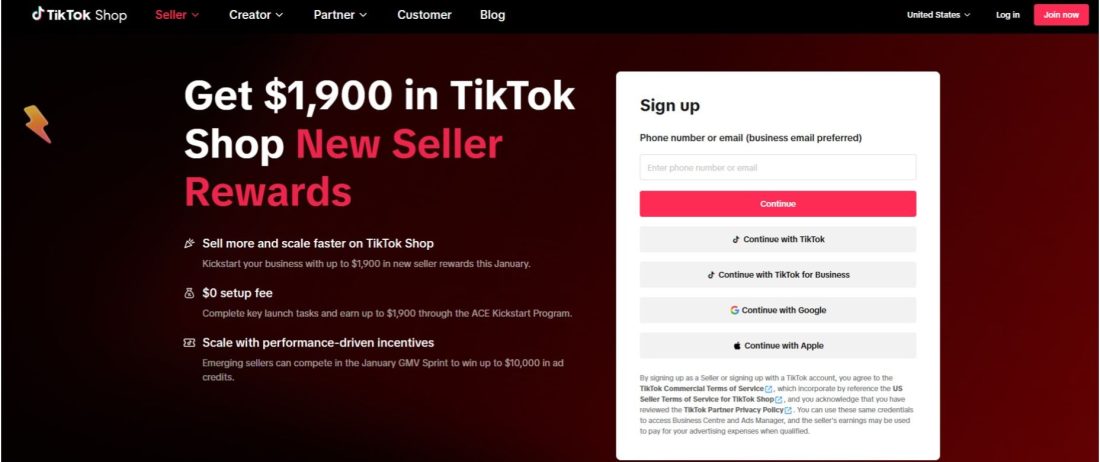
TikTok Shop affiliate marketing doesn’t unlock automatically just because a creator posts product content. Eligibility and setup are designed to filter accounts that can drive commerce-ready engagement.
For sellers and affiliates alike, understanding this differentiation is crucial because missing one requirement can quietly block access, even when content is performing well.
This section breaks down how TikTok Shop affiliate marketing eligibility works and how to work on it without trial and error.
1. Who Can Join TikTok Shop Affiliate Marketing program
TikTok states that affiliates need around 5,000 followers, but honestly, that number serves more as a filter than a guarantee. What actually gets accounts approved faster is recent engagement, consistent posting, watch time, saves, and comment activity.
Sellers should understand this because creator quality matters more than the creator’s followers. A 6k-follower account with active comments will outperform a dormant 50k page every time.
Beyond that, the requirements are straightforward but non-negotiable: creators must be 18 or older, based in a supported region, and have a clean account history. TikTok Shop affiliate marketing program access is tightly linked to trust signals. Accounts with prior violations, recycled content, or aggressive reposting patterns tend to get delayed or silently restricted.
2. How Creators Activate Affiliate Access
Affiliate access is located within Creator Tools, not the main TikTok Shop seller interface. Many creators miss this simply because they’re looking in the wrong place. Once available, the affiliate section appears as a commerce feature rather than a monetization add-on.
For newer creators seeking to unlock access more quickly, the path is behavioral, not procedural. Posting product-related content, even without tags, signals commercial intent. Videos that demonstrate use cases, comparisons, or problem-solution narratives tend to trigger TikTok’s internal classification systems more effectively than trend-only content. In short, creators who already behave like affiliates are more likely to be treated like one.
3. Common Setup Mistakes That Stop Progress
One of the most common blockers is account overlap. TikTok does not allow a single account to operate as both a seller and an affiliate. Sellers who want to promote their own products through affiliate-style content must do so through a separate creator or marketing account. Trying to merge both roles into a single login often results in missing features or locked tools, with no clear explanation.
Region restrictions are another hard stop. TikTok Shop access is tied to account region, SIM data, and historical usage, not just IP address. VPNs don’t bypass this. Creators attempting to force access from unsupported regions often end up with partially enabled accounts that can browse products but can’t earn commissions.
For sellers, this matters because creator onboarding friction directly affects how quickly affiliates can start producing content. The smoother the setup, the faster the revenue follows.
Choosing Products That Actually Sell on TikTok Shop
TikTok Shop affiliate marketing breaks when the wrong products enter the system. For sellers, they pull the right kind of creator for their products.
For creators, it’s not commission size; it’s how easily the product sells itself on camera. When both sides align, scale happens naturally.
1. How Sellers Pick Products That Attract and Retain Affiliates
Products that perform well with affiliates tend to sit in a narrow pricing band. They’re cheap enough to feel like an impulse decision but expensive enough that the commission feels worth a creator’s time. If the payout doesn’t justify filming, editing, and posting multiple angles, creators will test once and move on.
Beyond price, sellers who win with affiliates think in campaign windows, not single SKUs. Seasonal demand holidays, back-to-school, and gifting moments give creators a reason to post now, not later. Bundles perform especially well because they increase the average order value without adding complexity to the creative process. A creator can sell “one solution” instead of explaining multiple products.
Another overlooked factor is demo clarity. Products that can be understood visually within five seconds travel further through the affiliate ecosystem. If the benefit requires a long explanation or fine print, affiliates struggle to convert even with high commissions.
2. How Creators Evaluate Products Before Promoting Them
Creators who make consistent affiliate income don’t chase random trending products. They look for signals of buyer intent, not just views. Trending hashtags matter, but only when they’re paired with comment sections full of questions, confirmations, and repeat buyers. Views without intent are noise.
Competitor affiliate videos are the fastest and most effective form of research. Creators study what angles are already saturated and, more importantly, what’s missing. If every video focuses on the same benefit, there’s usually room to win by addressing objections, showing real usage over time, or comparing alternatives. Gaps, not virality, are where sustainable affiliate income lives.
Seasonality also plays a bigger role. Creators who align products with when people are already buying school cycles, weather changes, and cultural moments convert faster with fewer posts. Timing often matters more than creativity.
Sellers should also understand that products don’t fail in TikTok Shop affiliate marketing because of weak creators. They fail because they’re hard to show, mistimed, or priced in a way that doesn’t motivate anyone to push them. Sellers who think like creators and creators who think like buyers are the ones who consistently win.
Content That Actually Converts in TikTok Shop Affiliate Marketing
TikTok Shop affiliate marketing content doesn’t fail because creators lack creativity. It fails because the content doesn’t align with TikTok’s metrics for commercial usefulness. Videos that convert are meant to be clear.
1. Video Formats That Drive Clicks and Sales
The first three seconds are about positioning. TikTok decides almost instantly whether a video deserves distribution based on whether viewers understand what the product is and why it matters. Curiosity works only when it’s anchored to a clear outcome.
Formats that consistently outperform standard “reviews” share one trait: they let the product do the convincing.
- POVs work because they simulate ownership. Viewers aren’t being told to buy; they’re watching someone already living with the product.
- Comparative breakdowns are effective because they facilitate decision-making. When a creator answers “why this instead of that,” friction drops.
- Before/after and real-use demos outperform explanations. Visible change is harder to ignore than claims.
- Trending challenges tied to product use succeed only when the product remains central to the user’s experience. The trend opens the door; the product must justify its staying power.
2. Why Engagement Quality Matters More Than Follower Count
Follower count is a weak predictor of affiliate performance. TikTok’s distribution system prioritizes viewer commitment over audience size. High view-through rates indicate that the algorithm’s content holds attention. Saves signal future buying intent. Comments, especially questions, indicate unresolved interest that TikTok wants to serve again.
Affiliate videos that generate this type of engagement get recycled into new feeds long after posting. That’s why small creators with sharp content often outperform larger accounts pushing generic product mentions.
From a seller’s perspective, this is why creator vetting should focus on how people respond, rather than how many followers they have.
3. Layered Promotion: How Smart Creators Multiply Demand
Top affiliates don’t rely on a single platform for momentum. TikTok remains the transaction engine, but other platforms act as pressure points. Instagram Stories and YouTube Shorts are used to warm interest and redirect attention back to the shoppable TikTok video, not to replace it.
For placements where TikTok Shop tagging isn’t possible, creators use bio links strategically, not aggressively. The goal isn’t to move checkout elsewhere; it’s to capture curiosity and bring it back into TikTok’s native purchase flow, where conversion is highest.
This layered approach benefits sellers by extending the lifespan of high-performing affiliate content without fragmenting attribution or intent. Content that converts on TikTok Shop doesn’t chase trends or polish. It reduces uncertainty, provides proof, and respects TikTok’s decision-making process for what deserves to sell.
Ads for TikTok Affiliate Shops
In TikTok shop affiliate marketing, ads don’t turn weak affiliate content into winners. They expose whether demand already exists. In TikTok Shop affiliate marketing, paid traffic can actually boost your sales, and treating it otherwise can lead to a rapid depletion of budgets.
1. When Ads Make Sense in Affiliate Marketing
Paid promotion should only be considered after a video has proven it can sell without external assistance. Organic validation matters because TikTok’s paid system inherits the same behavioral signals as organic distribution.
Clear indicators that a video is ready for ads:
- Viewers rewatching key moments
- Saves and comment threads asking about price, delivery, or results
- Consistent sales without creator follow-ups
2. Spark Ads as the Core Affiliate Ad Format
For TikTok Shop affiliate marketing, Spark Ads is important for the algorithm. When you boost an existing affiliate video, TikTok preserves the engagement history that the recommendation system already trusts. That history matters. Videos with pre-existing saves, comments, and rewatch behavior enter paid distribution with a higher quality score than cold creatives, which directly affects delivery efficiency and conversion rate.
In practice, affiliate Spark Ads consistently outperform custom ads because they inherit behavioral proof. A creator video with even 300–500 organic comments signals validation before a single paid impression is served. When that same content is repurposed as a custom ad, TikTok resets trust signals to zero. Sellers notice this difference quickly: higher CPMs, lower view-through rates, and weaker product tap-through rates.
Spark Ads also solves a structural affiliate problem: creator credibility decay and underpaid traffic. Affiliate content is effective because it appears observational rather than persuasive. When you run a custom ad, viewers instinctively switch into “ad avoidance” mode. Spark Ads maintains the creator’s identity, caption style, comment thread, and posting cadence, ensuring the content remains part of the feed, not a sales insertion.
From a scaling standpoint, Spark Ads let sellers amplify what the algorithm has already pre-qualified. You’re not guessing which angle works; you’re paying to distribute a video that has already cleared organic performance thresholds.
That’s why high-performing affiliate sellers only boost videos that hit specific benchmarks first: a stable 2–3%+ product click rate, comment velocity within the first hour, and sustained view-through past the 6-second mark.
3. How to Plan Budget Without Burning Cash
Smart affiliates don’t scale ads first; they apply pressure deliberately. A $20–$50 per day Spark Ads budget is stress-testing how a video behaves once TikTok starts pushing it beyond the creator’s core audience.
Underpaid distribution and weak videos fail fast. Hooks that worked organically can collapse when shown to colder users. Comment sections shift from curiosity to skepticism. Conversion rates drop once the creator stops responding in real time. These are not ad problems; they’re content fragility problems, and small budgets expose them at a low cost.
Sellers look for flat product click-through across days, consistent comment sentiment, and purchase continuity even when creator engagement slows. If sales only happen when the creator is actively responding, the video won’t scale.
Light paid pressure also reveals whether the demand is real or there is a situationship going on. A video that converts only during peak posting hours or collapses after 48 hours isn’t a scale candidate. Videos that hold conversion with steady pacing and minimal decay are the ones worth increasing spend on.
4. Targeting Strategy That will Actually help you scale your brand
The fastest way to break a good affiliate video is to overthink targeting.
TikTok already knows who buys. It sees who watches all the way through, who pauses on product demos, who taps without hesitation, and who actually checks out. When you pile on interests, lookalikes, or tiny audience rules.
Broad U.S. targeting works because it gives TikTok room to breathe. The platform can test the video across different user groups and quickly identify those behaving like buyers. That learning happens faster when you stop forcing assumptions onto it.
Affiliate content especially needs this freedom. These videos have already passed an organic test. They’ve proven they can hold attention and trigger intent. Locking them into narrow audiences typically leads to slow delivery, unusual spending patterns, and sales that occur in bursts rather than being consistent.
Keeping targeting simple isn’t cutting corners; it’s trusting the part of TikTok that actually works. Let the creative do the filtering. Step in only when the data is obvious, and even then, remove what’s not working instead of guessing what will.
Note that if a video needs heavy targeting to convert, it’s not a scaling problem, but rather it’s a content problem.
5. What Content Deserves Paid Promotion
Paid traffic removes curiosity. Only content with instant clarity survives.
Videos worth boosting:
- Show the problem and solution visually
- Demonstrate real use or transformation
- Create urgency without explanation
Content that fails under ads:
- Trend-first videos
- Comedy that requires context
- Long storytelling that delays the payoff
6. Managing Creatives Without Chasing New Products
Most affiliate ads don’t die because the product stops working; they die because people get tired of hearing the same promise told the same way.
When fatigue hits, inexperienced affiliates jump to the next product. Experienced ones stay put and change the angle. The proof stays the same, the result stays the same, but the way the story opens shifts just enough to feel new in-feed.
This usually starts with the first three seconds. The same product can be introduced as a mistake, a shortcut, a comparison, a reaction, or a quiet “watch this” moment. Nothing else changes. Same demo. Same outcome. Same tag. But the audience experiences it differently.
Affiliates who win long-term reshoot hooks weekly, sometimes daily, while letting TikTok keep distributing the versions that still feel fresh. The product becomes familiar, not stale, because the narrative keeps evolving.
It is not a good idea if you’re rotating products to escape fatigue. Rotate perspectives instead, and let the product keep compounding.
How Metrics That Matter When Attribution Isn’t Perfect
TikTok Shop attribution tells you what direction you’re moving in, not the exact path you took to get there. Anyone optimizing off last-click certainty is lying to themselves. The sellers who win accept the blur and learn to read the signals underneath it.
Cost per product view is where paid affiliate reality starts. Clicks don’t matter if they don’t open the product page. For most TikTok Shop affiliate ads, anything under $0.80–$1.20 per product view is workable. Strong videos often settle closer to $0.40–$0.60 once delivery stabilizes. When this number climbs while CPM stays flat, it’s usually a hook or clarity issue, not a targeting one.
Comment quality matters more than comment volume
“Where do I buy this?” and “Does this work for ____?” are buying-intent comments. “LOL” and emojis aren’t. A video with 40 comments and 15 intent questions will almost always outperform a video with 300 generic reactions. Sellers who read comments daily catch objections early and know whether conversions are coming or stalling before the dashboard updates.
Revenue per 1,000 impressions (RPM) is the closest thing to the truth when attribution is messy. It smooths out lag, cross-device behavior, and delayed purchases. A healthy affiliate Spark Ad often lands between $25 and $60 RPM. Strong products with clean demos can achieve RPMs of $80–$100. If RPM holds while spend increases, you’re scaling. If spend goes up and RPM drops fast, fatigue or audience mismatch has already started.
What experienced affiliates don’t do is panic over daily fluctuations. They watch three-day and seven-day trends, looking for stability rather than spikes. One viral day doesn’t mean a system works. A boring, consistent curve usually does.
Outreach & Recruitment for Sellers
Affiliate growth doesn’t slow down because creators aren’t available. It slows down because sellers approach outreach like influencer marketing instead of performance partnerships. The goal isn’t to “collab.” It’s to recruit repeat sellers of your product.
1. How Sellers Recruit Creators
The highest response rate occurs when sellers demonstrate they’ve done minimal homework. Referencing a creator’s format or angle matters more than praising their content.
Cold outreach works when it’s specific and transactional.
Sellers who lead with commission clarity outperform those who lead with brand stories.
Example cold outreach message (brand-tested):
“We’ve seen creators using POV demos in your niche perform well on TikTok Shop. Our product converts best in that format. We’re offering a higher commission for the first 30 days so you can test properly. If it doesn’t convert, no pressure to continue.”
Warm outreach is about momentum. Once a creator posts organically or engages with your product, the conversation should quickly shift toward incentives rather than persuasion. These offers signal seriousness. Creators treat high-intent sellers differently.
Effective incentives include:
- Temporary commission boosts to encourage multiple posts
- Free products or bundles to reduce creator risk
- Early access to seasonal drops
2. What Creators Actually Look For
Creators don’t evaluate affiliate offers emotionally; they evaluate them economically.
Higher commission rates matter, but only when paired with confidence in conversion. A low-priced product with weak demand won’t move even at high commissions. Sellers who understand this adjust their payouts strategically, rather than racing to the bottom.
Creative freedom is non-negotiable; scripts, rigid talking points, and forced angles kill performance. Creators protect their audience first; sellers who respect that get better content and repeat posts.
Transparency should not be compromised. Creators want to know:
- Expected pricing stability
- Fulfillment reliability
- Whether commissions will change mid-campaign
Compliance, FTC & Best Practices
Most sellers think compliance is about avoiding bans. In TikTok Shop affiliate marketing policy, it’s more subtle and more dangerous.
Poor compliance doesn’t usually get you suspended. It gets your content quietly deprioritized, your affiliates frustrated, and your conversion rate eroded through refunds and distrust.
1. Disclosure
FTC disclosure isn’t only about consumer protection. This also helps in making the platform trustworthy. TikTok expects affiliate intent to be declared using its native disclosure mechanisms, not just hashtags or caption text. When disclosure is inconsistent or buried, TikTok treats the content as misleading commerce, which limits distribution before enforcement ever kicks in.
For sellers, this creates a hidden problem, like affiliate videos that may look fine initially but then suddenly stop getting reach even though nothing obvious “broke.” That’s not randomness. That’s the system pulling back on content it doesn’t fully trust.
Best-performing affiliate programs make disclosure non-negotiable and standardized, not optional or creator-dependent.
2. Why Over-Selling Hurts More Than Under-Selling
The fastest way to kill a TikTok Shop listing is the post-purchase regret.
When creators exaggerate results or compress reality to force urgency, three things happen:
- Comment sections turn skeptical
- Refunds increase
- TikTok’s internal quality signals degrade
TikTok watches refund speed, review sentiment, and repeat buyer behavior. Sellers who allow inflated claims may see short-term spikes but lose long-term distribution across all affiliate content tied to that product.
3. Barriers that Sellers Should Set
High-performing sellers don’t script creators, but they set boundaries:
- What the product does not do
- What claims require personal experience vs assumptions
- What comparisons are allowed
Final Thoughts
In TikTok Shop affiliate marketing, sellers who scale aren’t the ones that react to trends in real time immediately; rather, they’re anticipating demand, guiding creator behavior, and doubling down only on what proves it can convert.
At this level, you need visibility into which products creators want to promote, what content formats are actually driving buyer intent, and where revenue is leaking before you scale ads or commissions.
This is where SellerApp comes to your rescue. SellerApp helps sellers identify high-intent products, understand demand signals before affiliates flood a category, and track performance to support smarter creator recruitment and paid amplification decisions. Instead of guessing which products or creators to push, you’re working from real conversion intelligence.
TikTok Shop rewards sellers who move early and optimize constantly. If you want to turn affiliate chaos into predictable growth, SellerApp gives you the data advantage to do it before everyone else catches on.
Read More:
TikTok Trending Products in 2026: How to Spot, Sell, and Scale Before the trend Fades
40 Game-changing TikTok Amazon Finds of 2025
TikTok Shop vs Amazon: A Seller’s Guide to Choosing the Right Platform
TikTok shop fulfillment: Everything you need to know
TikTok Shop Seller Center Guide to Get You Ready for TikTok Marketplace
The post TikTok Shop Affiliate Marketing: How Creators and Sellers Actually Make The Big Bucks appeared first on SellerApp Blog.
from SellerApp Blog https://ift.tt/mFxNKT0
via IFTTT
Add a review