
How reliable are AI-driven Amazon PPC tools for boosting sales? ( 2 Case Studies)
Descriptions
Sellers often ask how reliable are AI-driven Amazon PPC tools for boosting sales? And the honest answer most vendors won’t give you is that it depends entirely on what you’re asking the tool to do and whether your account is ready for it.
Sellers asking how reliable AI-driven Amazon PPC tools are for boosting sales usually come from one of two places. Either automation worked better than expected, and they want to understand why, or they handed over their campaigns, watched ACoS climb, and are trying to figure out what went wrong.
Both trace back to the same gap, a mismatch between what AI-driven Amazon advertising tools are built to do and what sellers assume happens the moment they’re switched on.
How reliable are AI-driven Amazon PPC tools for boosting sales when used correctly? The best
AI Amazon PPC tools for sellers have helped cut ACoS by 20–50%, surface wasted spend buried inside large campaign structures, and recover hours every week from manual bid management.
Those results don’t arrive on day one. They compound over 30 to 90 days as the system learns your account. Before reaching for AI-powered bid optimization on Amazon, most sellers need to understand what they’re actually buying, because “AI-powered” covers everything from genuine machine learning to a set of rules with a better dashboard.
Quick Gudie :
- How Reliable Are AI-Driven Amazon PPC Tools for Boosting Sales?
- How SellerApp’s AI Automation Helps Boost Amazon Sales with AI PPC
- Case Studies: Accounts That Boosted Amazon Sales with AI PPC
- Final Thoughts ( How reliable are AI-driven Amazon PPC tools for boosting sales?)
How Reliable Are AI-Driven Amazon PPC Tools for Boosting Sales?
The question of reliability comes down to data. AI Amazon PPC tools learn from your account. No data means no learning. Hand an ML model a brand-new ASIN with zero conversion history, and it is essentially guessing, and you are paying for those guesses.
So, how reliable are AI-driven Amazon PPC tools for boosting sales when that data does exist? Meaningfully more reliable than any manual approach at the same scale.
Sellers who build 60 to 90 days of manual conversion data before switching see better results, faster. That sequencing matters more than which platform you choose. Once the data exists, an automated Amazon bidding strategy starts doing what manual management structurally cannot, catching every target across every campaign, continuously, without missing the ones buried in a report nobody opened this week.
Choosing the best AI Amazon PPC tools for sellers means understanding this distinction before spending a dollar on any platform. Here is where rule-based automation and real AI-powered bid optimization on the Amazon platform part ways:
| How reliable are AI-driven Amazon PPC tools for boosting sales? | Rule-Based Automation | SellerApp AI |
| How it learns | Executes the same conditions you set months ago. Won’t flag when the logic goes stale. | Learns continuously from your account data. Gets sharper the longer it runs. |
| How it responds | Fires based on thresholds you defined weeks ago, regardless of what’s happening now. | Responds to current performance patterns and adjusts in real time. |
| Account visibility | Each rule operates independently. No cross-campaign view. | Sees patterns across every campaign and moves toward the best opportunities account-wide. |
| Peak events | Thresholds built for normal days fall apart during Prime Day or Q4. | Adapts as competitive dynamics shift. No manual reconfiguration needed. |
| Transparency | Rules run silently. You only notice when something breaks. | Every action is logged. Full visibility without the busywork. |
The challenges of automated Amazon advertising show up most clearly when sellers treat these two things as the same product. Amazon PPC analytics automation earns its place not as a replacement for strategy but as the only realistic way to execute it at scale, across hundreds of campaigns, thousands of targets, and bid decisions that need to happen faster than any manual process can manage.
Understanding the challenges of automated Amazon advertising, chiefly that rules go stale and ML needs data, is what separates sellers who get results from those who blame the tool. Amazon PPC analytics automation, done right, surfaces what human analysis misses at scale.
Amazon PPC AI optimization built on machine learning does this continuously; rule-based systems do it only when you remember to update the rules. The gap between those two approaches is where AI-driven PPC sales growth actually comes from.
How SellerApp’s AI Automation Helps Boost Amazon Sales with AI PPC
Most Amazon PPC AI optimization tools stop at bids. SellerApp connects bid decisions to keyword research, product-level analytics, competitor data, and listing signals, working from a fuller picture than campaign numbers alone can provide.
For sellers trying to boost Amazon sales with AI PPC, the difference between a tool that only adjusts bids and one that reads the broader account context is where real gains separate from marginal ones. Amazon PPC analytics automation at this level means fewer manual check-ins, fewer surprises, and a clearer line between where ad spend goes and what it returns.
The AI automation reads campaign data continuously and adjusts bids on alternate days based on patterns specific to your account. A keyword cluster that converted well last quarter but went cold gets caught before it bleeds budget for another month. Campaign budgets that exhaust at 9 am, leaving peak shopping hours uncontested, are paced properly. The waste hiding inside averages gets surfaced line by line.
This is AI-driven PPC sales growth in practice, not a single dramatic shift but a compounding set of corrections that builds a structurally better account over time. AI-driven PPC sales growth at this level only happens when the tool understands your account’s history, not just its current numbers.
Where SellerApp differs from generic AI-powered Amazon PPC management is in how sellers define the goal. You set the priority. The system calibrates everything around it through three modes. As Amazon PPC automation trends in 2026 push toward smarter auction dynamics and Rufus-driven discovery, AI-powered Amazon PPC management that adapts continuously is no longer optional for competitive categories.
Aggressive is for launches and market share grabs. The system pursues impression share, finds converting terms fast, and builds velocity even at a higher early ACoS. The economics improve as organic rank builds.
Balanced suits roughly 80% of any catalog. It finds high-converting opportunities, automatically cuts underperformers, and keeps performance consistent month over month without swinging to either extreme.
Conservative is for products that have already won their category. If organic rank is strong, paying for those clicks funds traffic you would get for free anyway. Conservative mode doubles down on proven winners and pulls back on anything marginal.
Modes switch as products move through their lifecycle. Every adjustment is logged, visible, and manually overridable when something the data cannot see changes, such as a restock, a price shift, or a competitor dropping out.
SellerApp works with brands across the U.S., U.K., UAE, and India, from private label sellers scaling their first catalog to multi-category brands managing enterprise-level ad spend.
On both G2 and Trustpilot, seller reviews consistently highlight two things. The sellers claim they have saved hours on weekly bid management and have clear visibility into what changed and why, something most AI-powered Amazon PPC management platforms do not offer. Sellers switching from other AI-powered Amazon PPC management tools to SellerApp point to that transparency as the deciding factor. So, when it comes to the question “how reliable are AI-driven Amazon PPC tools for boosting sales?”, SellerApp is the absolute gold standard.
Case Studies: SellerApp Accounts That Boosted Amazon Sales with AI PPC
If you’re constantly wrestling with the question ” How reliable are AI-driven Amazon PPC tools for boosting sales?”, here are some of SellerApp’s clients that managed to drastically improve their metrics with AI Automation.
Sumsae, Beauty and Skincare, February 2025 to present
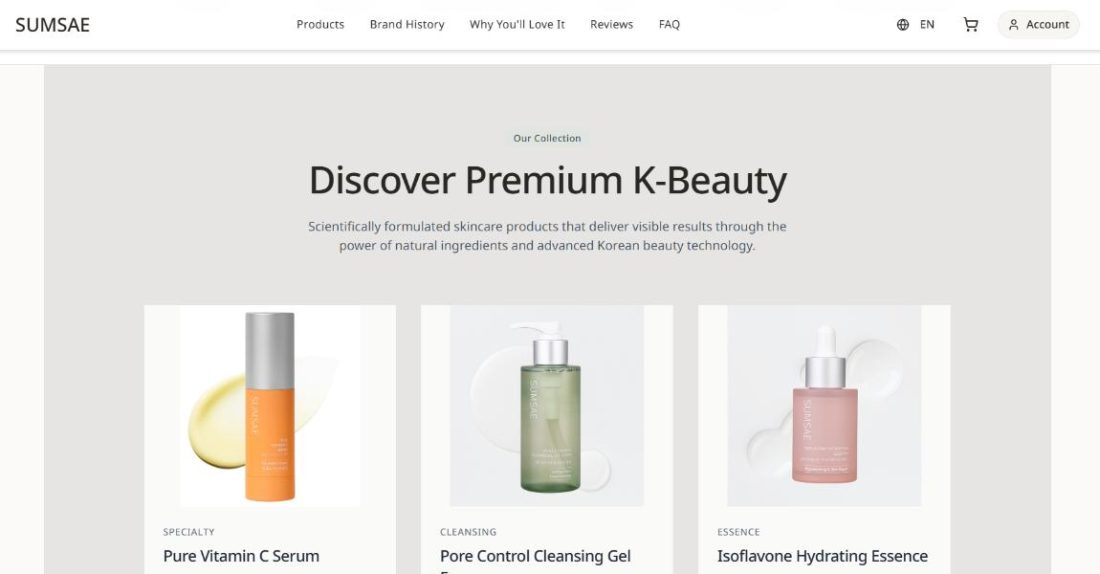
Sumsae came in at $330 a day across a category where 30 of the 60 page-one results are sponsored. Week one ACoS was 92%. The account had 573 active keywords, with no filter on what was earning them their place. Campaigns burned through budget in the early hours and ran dry before peak windows opened.
SellerApp’s keyword harvester found 14 converting search terms the seller had never targeted. In a category this crowded, that is real money left on the table every week. Simultaneously, 33 negative keywords and 51 negative ASIN targets were added in the first 30 days, cutting spend on pulling clicks with no conversion signal.
Week three ACoS came down to 82.64%. Week six landed at 84.29%, not a straight line, which is normal for dense skincare categories. Budget pacing was fixed, wasted spend was removed, and the account had a structure that was no longer bleeding from the same places.
Bambuish, Car Accessories, February 2025 to present

Bambuish arrived with a 70,000 INR monthly budget, 2,212 active keywords, and a week-one ACoS of 151.12%. Every rupee spent returned less than half a rupee in attributable sales.
The account had grown in volume without growing in structure with more keywords, targets, and ampaigns, but no mechanism to cut what wasn’t working. Campaigns were capping out early, same as Sumsae, leaving peak hours unaffected.
SellerApp found 10 high-converting search terms that had never been targeted, added 71 negative keywords, negated 40 ASIN targets, and identified that 13% of total ad spend was going to placements that contributed nothing to conversions. Week three ACoS dropped to 104.76%. Week six landed at 92.51%, with a consistent direction, structural fixes in place, and a working framework replacing a sprawling one.
Final Thoughts ( How reliable are AI-driven Amazon PPC tools for boosting sales?)
How reliable are AI-driven Amazon PPC tools for boosting sales in 2026? More reliable than ever before for accounts that provide the right conditions. Conversion history, stable inventory, a clear goal, and enough time for the model to learn.
Accounts that check those boxes see compounding improvements that manual management and AI-driven Amazon advertising tools that rely on static rules simply cannot match at scale.
How reliable are AI-driven Amazon PPC tools for boosting sales when the conditions are wrong? They are not, and no amount of automation fixes a structural problem the seller has not diagnosed first. The best AI Amazon PPC tools for sellers and the best automated Amazon bidding strategy in the world still need good data to work from. Amazon PPC automation trends in 2026 make this clearer, not murkier.
As AI-powered bid optimization on Amazon gets more sophisticated, the floor for what counts as “ready to automate” rises with it. Sellers who successfully navigate the challenges of automated Amazon advertising treat these tools as force multipliers, not shortcuts.
Amazon PPC AI optimization built on real machine learning, like what SellerApp runs, compounds over time, and that compounding is the turning point for your business. Amazon PPC automation trends in 2026 reward accounts that systematically boost Amazon sales with AI PPC, not sporadically.
AI-powered bid optimization on Amazon works when it has something to learn from. AI-driven Amazon advertising tools are only as good as the account structure underneath them.
SellerApp’s account-level machine learning, lifecycle-based mode switching, and full action transparency are built for sellers who want automation that earns trust over time. To see where it would move the needle on your catalog, book a 15-minute assessment at sellerapp.com/schedule-demo.
The post How reliable are AI-driven Amazon PPC tools for boosting sales? ( 2 Case Studies) appeared first on SellerApp Blog.
from SellerApp Blog https://ift.tt/dB5LkeZ
via IFTTT
Add a review