
Amazon SPN and The Client Acquisition Channel Agencies Are Sleeping On
Descriptions
Amazon SPN (Service Provider Network) gives Amazon agencies a way to get discovered by sellers looking for specialized services, creating a new channel for agencies to generate qualified leads and grow revenue beyond referrals.
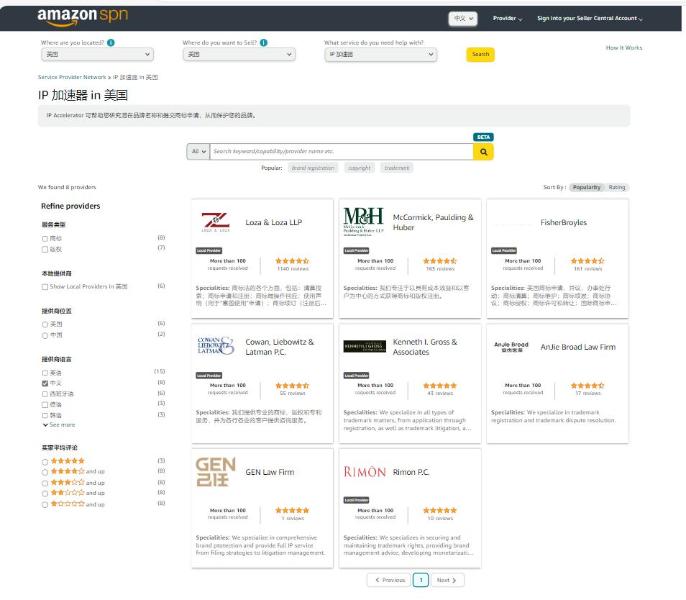
Sellers with a specific problem can use Amazon’s Service Provider Network to find, compare, and contact providers.That makes Amazon SPN an interesting acquisition channel because the demand already exists. Amazon lists more than 750 providers, with feedback from roughly 37,000 sellers. Sellers can filter providers by service, location, language, and reviews. But getting discovered is only the start. SellerApp benchmark report breaks Amazon advertising performance down by category, giving agencies benchmarks for metrics like CPC, ACoS, and TACoS. These benchmarks can help agencies identify category-specific opportunities and show prospects where their advertising performance has room to improve. For agencies, the real opportunity is turning seller intent into measurable revenue growth.This guide covers how Amazon SPN works, what sellers look for, how it differs from the Selling Partner Program ( SPP), and whether joining makes sense for your agency.
Quick Guide :
What Is Amazon SPN and How Does the Service Provider Network Work?
Amazon Service Provider Network (SPN) is Amazon’s network of third-party providers that help selling partners with services such as advertising, account management, cataloging, imaging, and other marketplace operations. For agencies, SPN creates another channel for reaching sellers who are already looking for specialized Amazon expertise. Instead of relying entirely on referrals, outbound sales, or organic visibility, agencies can use their SPN presence to put their services in front of businesses actively seeking support. For sellers, SPN makes it easier to find providers based on the service they need and evaluate agencies with relevant Amazon experience. That could mean finding help with PPC, account management, listing optimization, or other marketplace challenges. For an agency, however, getting listed is only the starting point. The bigger opportunity is turning that visibility into qualified conversations, winning the account, and expanding the relationship into ongoing services.
How Amazon SPN Differs From SPP
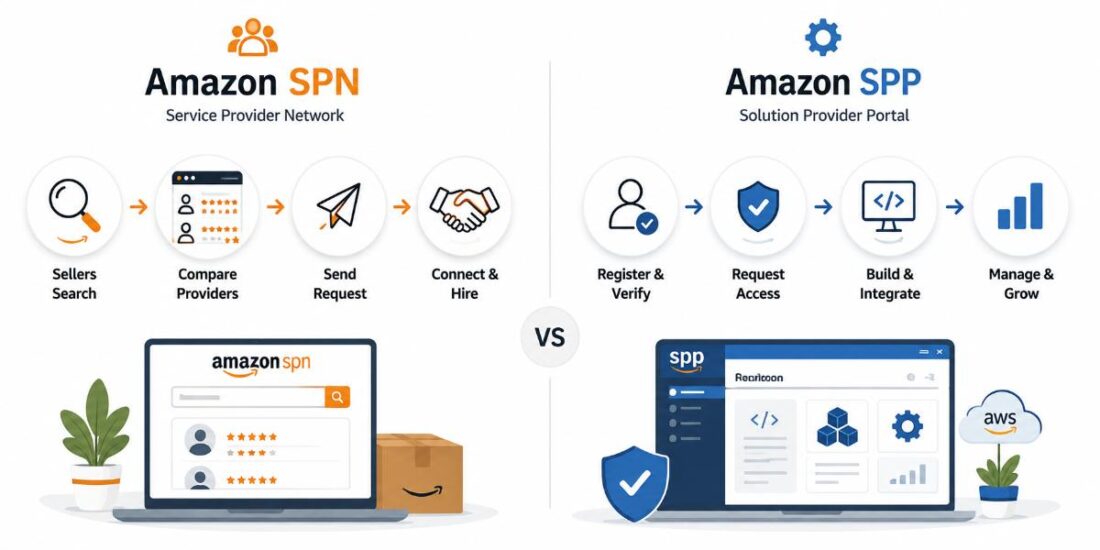
SPN and the Solution Provider Portal are often discussed together, but they serve different purposes. The Amazon SPN network is primarily the seller-facing discovery environment. Sellers use it to find agencies and individuals offering specific services. The Solution Provider Portal supports third party developers and service providers working with Amazon services and relevant technical workflows. Amazon’s developer documentation describes the portal as the gateway for third-party developers and service providers and connects it with registration, verification, roles, and seller authorization processes.
| Amazon SPN | Solution Provider Portal |
| Service Provider Network | Solution Provider Portal |
| Seller facing network for discovering service providers | Platform used by providers and developers to work with Amazon services |
| Helps sellers find agencies and individuals for specific services | Supports provider onboarding, verification, permissions, and relevant Amazon workflows |
| Focused on service discovery and seller requests | Focused on the provider side of Amazon’s ecosystem |
| Sellers compare providers based on available information such as services, reviews, specialties, and completed requests | Providers use the portal for relevant registration and access workflows |
| A channel through which agencies can potentially acquire seller leads | Infrastructure that supports the provider relationship with Amazon |
The simplest way to think about it is this. SPN helps sellers find you. SPP supports the provider side of working within Amazon’s ecosystem.
Can You Have Amazon SPN Without SPP?
No. For agencies, the Solution Provider Portal is effectively the front door to Amazon SPN. You create the SPP account, select the service provider persona, and submit the application through that portal before your provider listing can enter the SPN ecosystem. The confusion comes from the fact that SPN and SPP serve different audiences. Sellers use the SPN directory to discover and evaluate service providers, while agencies use SPP for provider registration and related Amazon workflows. So a seller never needs to interact with SPP to use SPN, but an agency seeking an SPN listing does.
How Amazon SPN Works for Agencies and Sellers
How It Works for Agencies
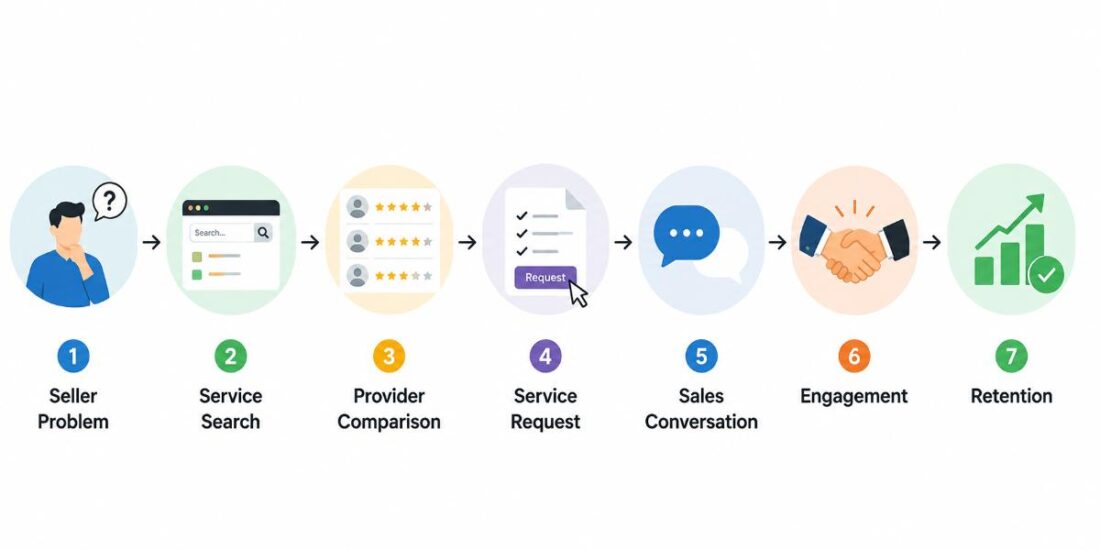
For agencies, the process starts with creating an SPN provider profile, adding relevant services and marketplaces, and making the agency discoverable to sellers looking for those services. When a seller submits a relevant request, the agency can review the requirement and decide whether to pursue the opportunity.
How It Works for Sellers
Sellers access SPN, select the service they need, and filter providers based on factors such as location and marketplace. They can compare provider information, including reviews, completed service requests, specialties, and reference prices, before selecting Contact Provider and submitting a request.
How to Get Your Agency Listed and Discovered on Amazon SPN
Getting your agency onto Amazon SPN is only the first step. Once you’re approved, your profile needs to make it clear why a seller should choose your agency over other providers offering the same service.
Step 1: Register Your Agency With Amazon SPN
Amazon directs prospective providers to its service provider registration process. Agencies need to submit business information and identification documents and meet Amazon’s provider standards, which can vary by service. Approval gets you into the network. It doesn’t guarantee that sellers will find or choose you.
Step 2: Define the Services Your Agency Offers
Be specific about what your agency actually does. If you provide Amazon PPC management, make that clear rather than positioning yourself as an agency that “does everything Amazon.” If you specialize in listing optimization, account management, DSP, or a particular marketplace, highlight that expertise. A clear service profile makes it easier for sellers with a specific need to recognize your agency as relevant.
Step 3: Position Your Agency Around a Specific Seller Need
A supplement brand looking for PPC support may not be looking for the biggest agency in the directory. It may be looking for a team that understands supplements, has experience with high-SKU catalogs, or knows a particular marketplace. Use that specialization in your positioning.
- Amazon advertising for Health and Wellness brands
- PPC management for high-SKU catalogs
- Amazon account management for international sellers
- Listing optimization for new product launches
The goal is simple: a seller should be able to recognize their problem in your profile.
Step 4: Add Proof That Your Agency Can Deliver
Sellers can evaluate providers using information such as reviews, completed service requests, specialties, and reference prices. That makes evidence an important part of your SPN profile. Show what your agency has actually done. Case studies, relevant experience, reviews, and measurable outcomes give potential clients something concrete to evaluate before they contact you.
Step 5: Get Discovered by the Right Sellers
Once your profile is live, sellers can search SPN for the services they need and compare available providers. This is where specialization becomes commercially useful. An agency that clearly communicates its expertise can attract sellers looking for that specific capability instead of competing for every possible SPN request.
Step 6: Turn the SPN Request Into an Account
The service request is the beginning of the sales process, not the end of it. A seller might contact your agency for PPC management because their ACOS is too high. The underlying problem could involve poor conversion, weak listings, inefficient keyword targeting, or a margin issue. Your job is to diagnose the account, demonstrate that you understand the problem, and show how your agency can address it. And there’s one final consideration: can your agency actually handle the additional business? SPN can create more opportunities, but if your team is already stretched, winning more accounts can create delivery problems just as quickly as it creates revenue.
How the Amazon SPN Application and Vetting Process Works
Getting listed on Amazon SPN starts on the provider side, through Amazon’s Solution Provider Portal. The process is more structured than simply creating a public directory profile.
Here is what agencies can expect
Step 1 Register through the Solution Provider Portal
Create an SPP account and select the “I’m a Service Provider” persona.
Step 2 Submit your business and identity details
Amazon requires identity and business verification, including a government-issued ID and business license for the business owner or legal representative. Applicants may also need a recent bank or credit card statement to verify the business address.
Step 3 Submit the application for review
Once you submit the required information and documents, Amazon reviews the application. Amazon’s provider guidance states that processing can take up to 10 business days for relevant submissions.
Step 4 Get listed for eligible services
Once approved, your agency can be listed for the service categories available for registration. These can include areas such as imaging, cataloging, account management, advertising optimization, and training.
Step 5 Maintain your provider standing
Getting listed is not the end of the process. Amazon monitors provider performance, so agencies need to maintain service quality and remain compliant to build credibility within the network.
Does Your Agency Actually Need to Join Amazon SPN?
The financial case also depends on the type of clients your agency can attract through SPN. A seller looking for ongoing PPC or account management can be worth significantly more than a one-time service request, especially if the account has multiple brands, a large catalog, or room to expand into additional services. Look at average client value, monthly retainer, retention, and opportunities to cross-sell services alongside the number of leads you receive. If an SPN lead can turn into a long-term account, the channel becomes much more valuable than the initial service request suggests. Qualification matters too. Since sellers are already approaching providers with a specific need, agencies can quickly assess whether the account fits their minimum spend, category expertise, marketplace experience, and delivery capacity before investing time in a sales conversation.
| Pros | Cons |
| Access to sellers actively looking for services | No guaranteed lead volume |
| Additional acquisition channel | Competition with other providers |
| Seller reviews can build credibility | Reputation matters after joining |
| Potential for recurring engagements | Requires operational capacity |
| Opportunity to expand accounts | Listing alone does not create demand |
| Visibility inside Amazon’s seller ecosystem | You still need strong sales and delivery |
When Amazon SPN Makes Sense for Your Agency
Consider an agency doing $1 million in annual revenue through referrals and outbound. Its delivery team is strong. Its case studies are strong. But its pipeline depends heavily on the founder’s network. That agency does not necessarily need more capability. It needs another source of qualified demand. The Amazon SPN network can fill part of that gap.There is another case where SPN can make sense. Imagine a smaller agency that specializes in Amazon advertising for consumer brands but struggles to compete against large agencies in organic search. SPN can put that agency in front of sellers without requiring it to first win Google’s rankings for every Amazon advertising keyword. The key is specialization. A seller looking for help with a specific problem is easier to convert when your profile looks like the answer.
What FBA Eligibility Means for Amazon SPN
FBA eligibility has become more relevant to Amazon SPN as Amazon has shifted how sellers handle preparation and labeling. As of January 1, 2026, Amazon stopped providing prep and item labeling services for FBA shipments in the US store. Amazon now requires sellers to have products properly prepared and labeled before sending them to its facilities. Sellers can either handle preparation themselves or use a third party provider, including providers vetted through Amazon’s network. That change makes FBA preparation a more meaningful service opportunity within Amazon SPN services. A seller who previously relied on Amazon for preparation now has to build that capability internally or find an external provider. Amazon specifically directs sellers toward vetted FBA Prep Providers as one option. For agencies and service providers, the takeaway is that FBA eligibility is not just a technical checkbox when evaluating the Amazon SPN network. Where an eligible FBA preparation service is available, it can address a very specific operational problem created by Amazon’s 2026 policy change.
How SellerApp Helps Agencies Turn Amazon SPN Leads Into Growth
At SellerApp, we help agencies go beyond campaign management with data-driven intelligence across advertising, products, competitors, profitability, and marketplace performance. Our Agency Platform gives teams multi-account control, advertising optimization, business monitoring, automated and white-labeled reporting, and the intelligence needed to manage client accounts at scale. When an Amazon SPN lead comes to your agency, SellerApp helps you understand the account before you prescribe a solution. You can analyze PPC performance, track product and keyword trends, monitor competitor pricing and share of shelf, evaluate listing quality, and understand actual profit at the ASIN level. Our real-time business alerts can also surface sudden changes in revenue, advertising, visibility, and other critical metrics. That intelligence can strengthen both client acquisition and retention. Instead of telling a seller, “Your ACoS is too high, so we will optimize your campaigns,” you can show what is actually driving the problem, how the account compares with its competitive environment, and where the next growth opportunity lies. Then, as the account grows, our Amazon PPC automation, reporting, listing intelligence, competitor intelligence, profitability analysis, and DSP capabilities give your team more ways to identify and act on those opportunities. For agencies, that means less time pulling data and more time making strategic decisions, serving more clients efficiently, and proving the revenue impact of your work. SellerApp already powers agency teams with multi-account management, automation, reporting, and intelligence built specifically for managing Amazon clients at scale. The SPN network can put you in front of the seller. SellerApp gives you the intelligence to win the account, demonstrate your value, and uncover more revenue opportunities after you do.
Final Takeaway: Should Your Agency Join Amazon SPN
The answer depends on your pipeline, capacity, and growth goals. If your agency relies heavily on referrals or founder networks, Amazon SPN can add another source of qualified seller demand. For smaller agencies with a clear niche, it can also put your expertise in front of sellers without requiring you to win the search results against larger competitors. But more leads are not always better. If your team is already at capacity, adding another acquisition channel can create a delivery problem instead of a growth opportunity. Getting listed is only the first step. The real advantage comes from what you do when a seller reaches out. A service request tells you what the seller thinks is wrong. It does not always reveal what is actually limiting their growth. That is where SellerApp Intelligence comes in. With SellerApp’s Agency Platform, you can evaluate an account across PPC, listings, competitors, profitability, and marketplace performance before you make your pitch. Instead of selling a service based on a seller’s stated problem, you can show them the opportunity backed by data. That turns Amazon SPN from another lead source into an opportunity to build deeper, longer-term client relationships. Ready to turn your next SPN lead into a growth opportunity? Explore SellerApp Intelligence and see how and see what the data can uncover.
FAQ
1. How do I choose the right provider on Amazon SPN?
Start with the problem you actually need to solve. Compare providers based on their relevant experience, specialties, reviews, completed service requests, and approach to measuring results. The right Amazon SPN services provider should understand your category and business model, not just offer a long list of services.
2. Does Amazon SPN guarantee that I will get good results?
No. Amazon provides the Amazon SPN network as a way for sellers to discover and evaluate third party providers, but the provider is responsible for delivering the service. Before hiring one, ask how they define success, what they will measure, and how they plan to connect their work to revenue and profitability.
3. What should I ask an SPN agency before hiring them?
Ask what they would diagnose first, which metrics they will use, how frequently they will report results, who will manage your account, and what happens if performance declines. You should also ask whether they can identify opportunities beyond the initial Amazon SPN services you are hiring them for.
4. Can an SPN agency help if my Amazon sales are falling but my ads look fine?
Yes, and this is exactly where the right SPN Amazon provider should look beyond your ad dashboard. Declining sales can come from lower conversion, pricing changes, stronger competitors, inventory issues, listing problems, or declining organic visibility. A good agency should investigate the entire account before simply increasing ad spend.
5. How can agencies turn Amazon SPN leads into long-term clients?
Treat the initial request as an entry point rather than the entire engagement. A seller may approach an agency for PPC but have a conversion, profitability, listing, or competitive problem underneath it. Using Amazon SPN services as the starting point and then solving the broader growth constraint can help agencies build larger, longer-term client relationships through the Amazon SPN network.
The post Amazon SPN and The Client Acquisition Channel Agencies Are Sleeping On appeared first on SellerApp Blog.
from SellerApp Blog https://ift.tt/vGYqBbV
via IFTTT
Add a review